July 2003 Cover
|
 |
Putting magic, thrill, and politics back into gay cinema
By
Michael Bronski
Gay film festivals have, over the last decade, garnered the reputation for being less than electrifying. That's why the scramble at the Castro theater on June 14th during the showing of the Israeli film
Yossi and Jagger (directed by Eytan Fox) must have added some real
excitement to the evening. The excitement was not, however, about the film-- a perfectly sweet-sad tale of a love affair between an officer and a private in the Israeli army-- but about Mideast politics. Members of QUIT-- Queers Undermining Israeli Terrorism-- took to the
stage to denounce the Israeli army and were greeted with both cheers and boos by the audience.
In the mid-1970s-- still flush from the excitement of Stonewall-- the idea of a gay film festival was a rush. In these days of queer overload in the media, can these gala events be thrilling and meaningful?
Well, the gay liberation movement pretty much worked over the next 20 years and now there are plenty of queer writers and directors who have far more access to mainstream venues. (It also helped that new technology made filmmaking cheaper than ever before.)
Festivals today are less political. The flagship San Francisco event books retrospectives like the made-for-television film of Randy Shilts's
And The Band Played On. It reprogrammed Jonathan Demme's
Philadelphia (along with People Like Us: Making
"Philadelphia" a documentary of the making of the film by Jeffrey Schwarz). There are also the usual "camp" movies: Charles Busch's
Die, Mommie Die, and Lee Demarbe's Jesus Christ, Vampire
Killer. Camp has always been a central, defining ingredient in gay culture but in recent decades it's become
manifest in a new, debased form-- the excruciatingly self-conscious, "aren't we being just too campy" play and film.
And there are a batch of POV-type documentaries-- Deborah Dickson's
The Education of Gore Vidal, Joan Biren's
No Secret Anymore: The Times of Del Martin & Phyllis
Lyon, and Hrafnhildur Gunnarsdottir and Thorvaldur Kristinsson's
Straight Out a documentary of Icelandic gay young people-- all probably quite good, necessary, and terrific educational material. But they don't make a film festival.
There are a handful of films that show some promise here-- usually foreign made. Remi Lange's
The Path to Love is a fictional exploration of the history and traditions of homoeroticism in the Maghreb. Jacques Nolot's
Porn Theater is a rambunctious comedy that is
both funny, sexy, and just plain weird in surprising ways.
There is nothing wrong with the idea of a queer film festival-- more public places for gay people to congregate is always a good idea. But the cultural shift in gay and lesbian films has been, over the past years, downward. Frankly episodes of "Six Feet Under, "Oz," and
even "Will and Grace" are more engaging.
When QUIT took the stage at the Castro theater, they did something that you hardly ever see at Festivals any more: they got the audience excited. The San Francisco-based Israeli consul general took to the stage and asked people to be understanding and open to
dialogue. Members of QUIT asked that the audience also attend
Path to Love and Queer Documentary in Wartime: A New View of the Israeli-Palestinian
Crisis. What QUIT did for the Festival that one night was make it politically engaging-- and that's saying a lot these days.
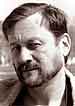
| Author Profile: Michael Bronski |
|
Michael Bronski is the author of
Culture Clash: The Making of Gay
Sensibility and The Pleasure
Principle: Sex, Backlash, and the
Struggle for Gay Freedom. He writes
frequently on sex, books, movies, and
culture, and lives in Cambridge,
Massachusetts. |
| Email: |
mabronski@aol.com |
You are not logged in.
No comments yet, but
click here to be the first to comment on this
Movie Review!
|