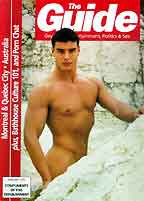
February 1999 Cover
|
 |
Two new films distort the history they claim to reveal
By
Michael Bronski
Shakespeare in Love
John Madden, director; written by Tom
Stoppard; with Gwyneth Paltrow, Joseph
Fiennes, Geoffrey Rush, Colin Firth, Ben Affleck, and Rupert Everett.
How to order
Elizabeth
Shekhar Kapur, director; written by
Michael Hirst; with Cate Blanchett,
Geoffrey Rush, Christopher Eccleston,
Joesph Fiennes, Vincent Cassel, Richard
Attenborough, and John Gielgud.
How to order
Elizabethan England was, by most accounts, a fairly rowdy affair: bear-baiting and public executions were popular entertainments, "sacred" morality and mystery plays were filled with bawdy humor, boys dressed as girls on stage, and Christopher Marlowe, one of its most popular playwrights, could exclaim "He who does not like tobacco or boys is a fool." It's a shame than that two new films-- Elizabeth and Shakespeare in Love-- avoid rather than convey the era's sexual and gender anarchy.
Shekhar Kapur's Elizabeth is a respectful, beautifully-filmed but trite retelling of the rise of Henry VIII's daughter to be ruler of Great Britain. Sure, Cate Blanchett is stunning as the willful young princess. And most of the supporting players-- Geoffrey Rush as advisor Sir Francis Walsingham, Christopher Eccleston as the scheming Duke of Norfolk, Joseph Fiennes as her love-interest Robert Dudley, John Gielgud as the Pope-- are as adequate and pretty to look at as she is. But Michael Hirst's script is at best ordinary. Here we have a great topic-- the ascension of an intelligent, willful, and extraordinarily resourceful woman to the most powerful position in the world-- and Elizabeth would have us believe that the origins of this triumph lie in failed heterosexual romance. Once the young Elizabeth discovers that she cannot trust men, because her lover, Robert Dudley (the very sexy Joseph Fiennes) is married to someone else, she gives up men, becomes "the virgin queen," and really gets down to ruling the world. The causal primacy accorded heterosexuality here is a disservice to both the historical Elizabeth as well as the audience's intelligence. True, the failed love of Elizabeth and Dudley (like Romeo and Juliet and Sid and Nancy) is a cornerstone of mythic Western heterosexuality-- the basis of operas, poems, novels, and second-rate films. But do we really need a re-telling now? Among the film's most important scenes is a cheap trashing of drag and sexual license: Elizabeth is being prodded into marrying the arrogant French Duc d'Anjou-- a sly, pretty Vincent Cassel-- for political reasons. But she cleverly gets around it by exposing him as a cross-dresser and a pervert when she crashes an orgy he is having in his rooms at her palace. As the scene is written and performed it makes little sense-- a French nobleman would not have left himself open to such an invasion during a time of delicate political maneuvering in a foreign country. But more important the scene is only there to trash the duke and reinforce Elizabeth's superior heterosexual status. A cheap shot. John Madden's Shakespeare in Love is more interested in exploring the nooks and crannies of Elizabethan eroticism. As written by Tom Stoppard, the film is a literary romp that careens through Shakespeare's early career and crackles with jokes. The plot here is that Shakespeare-- again, the lovely Joseph Fiennes-- has writer's block and cannot finish his new comedy Romeo and Ethyl, the Pirate's Daughter, which his new producer, Philip Henslowe (Geoffrey Rush, again)-- needs to make quick money. Shakespeare falls in love with the wealthy and beautiful Viola De Lesseps-- Gwyneth Paltrow-- who in turn loves the theater and disguises herself as a boy to join his acting troupe. Unfortunately she is engaged-- for monetary reasons-- to the awful Lord Wessex-- Colin Firth-- who is going to take her to the colonies to grow tobacco. Of course, as Shakespeare and Viola begin an affair, he understands that his new play must be the tragedy Romeo and Juliet. Perhaps the most amazing aspect of the film is Gwyneth Paltrow's drag performance as "Tom of Kent"-- she is convincing, boyishly beautiful, and very sexy. The scenes of "Tom" and Will Shakespeare kissing have real homoerotic tension. But Stoppard and Madder are intent on not exploring this. How intriguing it would have been to give Shakespeare scenes (ą la Victor/Victoria) in which the playwright is attracted to someone he believes to be a man; given the overwhelming evidence of Shakespeare's homosexual interests and activities, it would make perfect sense. But Hollywood-- or apparently even the film industry in Great Britain-- will not tolerate a bisexual Bard, so Will and Viola and Tom are completely heterosexualized. Worse, Stoppard allows none of the players in the troupe to be gay or even to entertain the idea that gender and sexual-behavior variance might be a part of this world. Even Christopher Marlowe-- Rupert Everett-- evidences no interests in boys-- or tobacco. Every inch along the way, Stoppard and Madden make the film straighter than need be and less interesting. It is almost as though they kept discovering quirky sexual angles-- Viola's role (as Tom) is playing Romeo to a boy dressed as Juliet-- but when the film ends she (through a series of crises) ends up playing Juliet to Shakespeare's Romeo. It's all too bad because there is a great movie to be made out of all of this-- tobacco, boys, drag queens, regal queens, and a whole range of diverse and perverse sexualities-- but you won't find it on your local movie screen this year. **
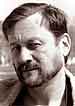
| Author Profile: Michael Bronski |
|
Michael Bronski is the author of
Culture Clash: The Making of Gay
Sensibility and The Pleasure
Principle: Sex, Backlash, and the
Struggle for Gay Freedom. He writes
frequently on sex, books, movies, and
culture, and lives in Cambridge,
Massachusetts. |
| Email: |
mabronski@aol.com |
You are not logged in.
No comments yet, but
click here to be the first to comment on this
Movie Review!
|