|
 |
With satisfying emotional mouthfeel
By
Michael Bronski
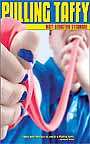
Pulling Taffy
by Matt Bernstein Sycamore
Suspect
Thoughts Press
How to order
Pulling Taffy, by Matt Bernstein
Sycamore (Suspect Thoughts Press,
$16.95)
I'm pulling on his cockhead,
squeezing with one hand and then the other.
He starts this high-pitched moan, sounds
like he's going to die but I know he's loving it.
He says oh could you touch my balls a but,
not too much. I
touch his balls, and then move back to his
cockhead, spit on my hand again and
squeeze, slide. He's not touching me
anymore, eyes closed, just squealing and
moaning. I'm watching him like some
strange creature-- it's amazing
and not quite funny, almost hot, and he
grabs my hands, says just squeeze gently
now. I hold his dick and squeeze the head.
He sits up, says oh that was wonderful, just
right. Do you think we could make it a
once-a-week
thing? When someone learns those
techniques, I feel like its an
investment."
This is how the hustler narrator of
Pulling
Taffy learns how to, well, pull taffy--
which is what his client (who has had his
prostate removed and cannot get a hard on)
describes as the method for getting him off.
This
jazzy excerpt from Matt Bernstein
Sycamore's debut novel-- which, as the
cover copy tells us "inhabits the
boundaries between fiction, autobiography,
and truth"-- pretty much conveys his
startlingly and ferocious world view:
sex is wonderful and frightening and always
connected to some sort of economy.
It would be easy to think that this
economy is simply about money-- the
narrator here is a working hustler, and much
of the book is concerned with the mercantile
details of the trade. But in
Pulling Taffy, the idea of
"economy" is much broader, far
more complicated.
Like the john who wants to see our
narrator once a week because "when
someone learns those techniques, I feel like
its an investment," Sycamore lures us
into a world in which sex and pleasure,
eroticism and fear,
take on whole new meanings: they become
necessary means of exchange for survival.
As a work of literature-- and
Pulling
Taffy is terrific literature-- this book
transverses a series of expected genres. It's
a cross between Kerouac's
On the Road and John Rechy's
City of
Night, except that it isn't as repetitious as
the former or as sentimental as the latter.
Sycamore has a unique voice-- reminiscent
of Frank O'Hara's
"and-then-I-did-this-and-then-I-did-that
" school of poetry-- that hints at
drugged-out-drag
patois but is firmly located in an urban
vernacular that is familiar to everyone, but
still surprising in its lilt and cadences. The
book skits about America from Boston to
Seattle to New York never settling down
long enough to develop the roots that
would locate or gentrify its narrator, thus
depriving him of his distinctive eloquence.
But if Sycamore has the perfect voice
for this picaresque, he also has the
intellectual stamina to give it resonance and
meaning. Sycamore has the ability, rare in
any writer, to mix the seedy and the
glamorous and
the ecstatic with the depressing: in other
words, he is able to capture and replicate
the perfectly normal emotional swings that
we all experience every day and make them
seem, as they are, normal and horrifying.
It is true that much of what happens
in
Pulling Taffy is outside of the alleged
experience of "normal" people--
crazed tricks, too much cocaine at the wrong
times, a sexually abusive father.
But to dwell on that is to miss the
power and the glory of Sycamore's story.
While the book's plot careers along like a
(good) Gus van Sant movie, hopping from
tricks to drugs, possible love to potentially
devastating
loss, the emotional underpinnings of the
book remain constant and complex.
Reading
Pulling Taffy is an exhilarating
experience because once you get past the
"this is a scary trip through a fucked up
culture" plot, it's impossible
not to be moved by the narrator's emotional
forthrightness and honesty.
Not only are we always aware of what
he is feeling, there is never a false move to
avoid or obfuscate the emotions that drive
the book along.
The emotional power here is quite
rare. Sycamore understands not only what
makes his narrator tick-- and laugh, and cry,
and get turned on, and get fucked-up and
have unprotected sex-- but he manages to
convey
that in such a way that we know he
understands it in us as well.
| Author Profile: Michael Bronski |
|
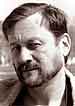
Michael Bronski is the author of
Culture Clash: The Making of Gay
Sensibility and The Pleasure
Principle: Sex, Backlash, and the
Struggle for Gay Freedom. He writes
frequently on sex, books, movies, and
culture, and lives in Cambridge,
Massachusetts. |
| Email: |
mabronski@aol.com |
You are not logged in.
No comments yet, but
click here to be the first to comment on this
Book Review!
|