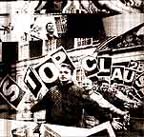
Labour undoes Britain's legacy of homophobic law-- oh just a
By
Roger Moody
Britain's Labour government has said it will abolish the one piece of former Tory legislation against which the country's lesbian and gays could unite over
the past 11 years. But the evangelical right-wing, backed by some powerful peers in the country's unelected second chamber-- the House of Lords-- has
pledged to buck the move. They hope that, by kicking the abolitionist measure back to the Commons, it will lie fallow until a new Conservative government is
elected. Or that the Labour government itself may abandon the fight.
In 1988, "Clause 28" was slipped into an act to reform Britain's local government. Its intention: to ban the "promotion" of homosexuality in state- supported
schools and higher education. Arguably the prohibition wasn't in the right parliamentary act in the first place. Had it properly formed part of an education bill, a
drafting subcommittee might have tossed the offending measure onto the scrapheap.
The early 80s were heady times for lesbian and gay teachers and workers among Britain's youth. Backed by the left-wing Greater London Council (GLC)-- then
the world's 17th biggest administrative body-- the Campaign for Homosexual Equality, Lesbian and Gay Youth, and gay teachers associations-- justifiably
felt themselves in the ascendant. During this period I was myself tutoring at a youth center, based in a popular London school, where the male leader and his woman assistant were
both openly homosexual.
By 1986 a number of texts were officially circulating through the education system decorously extolling same-sex partnerships, and challenging all forms of gender
and sexual discrimination: a few works implicitly criticized the very concept of an age-of-consent. Best known among these "offending" scripts was
Jenny Lives with Eric and Martin. Translated from a 1983 Danish children's book, it used both words and photos to depict a young girl's contentment at being brought up by two gay men.
It was Jenny who lit the gutter-press fuse. The savagely homophobic Tory newspaper
The Daily Mail used it to attack sexual corruption in the country's
education system, and in particular the GLC. But radical observers knew that the Tory government was out to fry bigger fish. It wanted to hobble the power of local
governments to decide education policy per se. And Tory leader Margaret Thatcher was determined to project the nuclear family as the main agent of "welfare capitalism"
and protector of the young. Doing this was not going to be easy, especially as official data showed that family life was particularly damaging to many children.
Far simpler to bend the image than face the reality. Conflating unnameable sexual practices, children as society's most "innocent" members, and
lesbian-gay seductiveness as a uniquely malign force proved one way to do it.
Almost as soon as Clause 28 was announced, opposition became clamorous. Thousands took to the streets in London and Manchester. There were
supporting demonstrations in New York, Amsterdam, and Paris, while the Norwegian government sent an official protest to Number Ten. A group called Lesbian Avengers
gate-crashed the BBC's prime-time six o'clock news; other protesters snuck into the House of Lords. The organization Stonewall was launched to coordinate the
abolitionist campaign at parliamentary level.
Lesbian and gay campaign groups gained a badly-needed fillip-- or at least a new target-- to set alongside self-defensive reactions to the holocaust of
HIV/AIDS. Eight years later, the high-profile parliamentary movement to equalize British ages-of-consent owed much to post-Clause 28 activism. However, although no
education authority has ever been brought to court for failure to observe this blatantly discriminatory piece of legislation, its impact on formal education agendas has been
severe. Stonewall director Angela Mason cites one recent example. Last November, an attempt by performing-arts students in Bristol to mount a play featuring two
cohabiting lesbians had to be rewritten to depict the couple splitting up.
Otherwise, says Ms Mason, it would "promote homosexuality as a pretend family relationship" and thus fall
foul of the law.
Such self-imposed censorship is real. Just how far pervasive daily discrimination against young gays and lesbians has gone unchecked because of Clause 28 is
more difficult to determine. Campaigners often claim that there's now much wider use of terms like "poof" or "lessie" associated with violence in British schoolyards than
11 years back. But similar language has been the stock-in-trade of childhood bullying for far longer. Stopping it isn't precluded by Clause 28; nor is individual
counselling of gay and lesbian youngsters. What
has been jeopardized is advising young people within the formal education system that they can express their
nonconforming sexuality with pride.
Nonetheless, it's with mixed emotions that some radicals have greeted the recently announced intention to abolish the Clause. If the Blair administration's
breaking of its pre-election pledge to equalize ages-of-consent is anything to go by, it could shelve or bypass the new measure this coming year. Even if the government keeps
its promise, this does not herald a new era of freedom, nor a return to the mythical "good old days" of pre-'28.
When originally conceived, Clause 28 was prompted by three main intentions. The first was to deter educators from "converting" their pupils to homosexuality.
It's a palpable nonsense which many more people now see as untenable than they did a decade ago.
The second intention was to peddle the stereotype of gay-man-as-child molester, in order to get rid of "pedophiles" within the educational system. But the
New Labour government, as well as some of its homosexual rights supporters, have done quite an effective job in targeting gay and lesbian teachers attracted to their
students. (Interestingly, the British press of late has been far more pruriently exercised about women teachers seducing 11-15 year old boy pupils than about gay men doing the same.)
The third intention was to signal to young homosexuals themselves that, even if they couldn't help being gay or lesbian, they mustn't act their sexuality out. In
this regard the debate has become clouded. The Thatcherites wouldn't-- and couldn't-- take steps against recruiting gays and lesbians in public service, at universities,
or even in government (though they have always been solidly against their employment in the armed forces and as spies). Clause 28 derived more from their desire to
deny young peoples' self-activity-- including the right to fondle and fuck with whom they like-- than with homophobia per se.
As long as homosexuality was allocated to its own confines-- whether in gay clubs and bathhouses, among the Bloomsbury set, or behind the bike sheds at
public (i.e., private) school-- successive British regimes have never had much trouble in both denying its reality and accepting its existence. But by the 1970s, school-age
and slightly older students were already mobilizing their own gay and lesbian rights agendas, firmly linked to wider critiques of Britain's social systems.
The threat posed by these potentially explosive-- and uncontrollable- constituencies, just had to be contained: hence Clause
28. The legislation will hopefully finally dumped in the coming year. But it will be a long haul before young people are granted the
political (including sexual) rights that most of their elders in this country now enjoy.
**
You are not logged in.
No comments yet, but
click here to be the first to comment on this
Magazine Article!
|





 Advertise with us
Subscriptions
Contact us
Site map
Translate
Advertise with us
Subscriptions
Contact us
Site map
Translate