|
 |
A gay writ for song
Get that mindless, machinic techno beat out of your brain, and pause to consider the fluid rhythms, rich harmonies, shifting moods, and yes-- dear reader-- the homoerotics that drench the 20th-century art song.
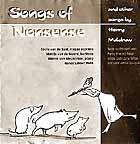
And now the 21st-century art song, with composer Henry Muldrow's new CD of his clever, chewy, engaging song-settings of some serious texts by Oscar Wilde and nonsense ones of Edward Lear.
More on that shortly. But what is it (leaving aside the matter of piano bars) about the marriage of voice and keyboard that seems such a gay one? Is it that art songs pack story-telling and emotions-by-the-barrelful
à la a Billie Holliday, a Judy Garland, or a Maria Callas
into a form tight, intricate, miniature, and exposed? Is it the way the art song brings poetry (a queer pursuit) and story (queens have a lot of them!) to life?
Sure, there were certifiably straight composers writing art songs in the 20th century. Among the greats shall be numbered Arnold Schoenberg (Mitsuko Shirai's surprisingly tuneful recording on Capriccio is the best), Charles Ives (try the tasty four-volume series on the
Albany label), Claude Debussy, and Richard Strauss.
But so many of the 20th-century song-writing standouts were queer-- such as Samuel Barber, Francis Poulenc, Michael Tippett, and Ned Rorem. No homo-musical romp through the last hundred years should miss Barber's breathtaking "Solitary Hotel" (his complete songs
are on Secrets of the Old, on Deutsche Grammophon). Michael Tippet's song cycle on Achilles and Patroclus bracingly realizes the famous Greek warrior-lovers, and his wonderful "Boyhood's End" always just-holds-back from ecstasy's brink (hear both sung marvelously by Martyn Hill
on Hyperion). George Butterworth's settings of poems from A.E. Housman's
A Shropshire Lad convey in music all of the poet's achingly sweet, bucolic, slightly necrophilic homoeroticism (recommended: Bryn Terfel's performance on his CD
The Vagabond, on Deutsche Grammophon). "They carry back bright to the coiner the mintage of man, the lads who will die in their glory and never be old," Housman wrote and Butterworth set to song, a few years before the composer took a sniper's bullet at Somme.
So with this rich tradition echoing in our ears, "Queer & There" eagerly popped into the player composer Henry Muldrow's new CD
Songs of Nonsense. An American-trained singer, Muldow lives in Amsterdam and has taken up composing in mid-life. His songs are
serious efforts, aiming high and compelling anyone whose ear is pricked to rise up and engage them. The music's complexity and inner connections won't jump out without attention, but the artistry of soprano Cécile van de Sant and baritone Mattijs van de Woerd will draw you in.
Wilde's texts-- from letters, poems, and plays-- have solemn heft. And the settings of Edward Lear's nonsense limericks ("There was a young lady of Portugal whose ideas were excessively nautical....") have that Alice-in-Wonderland deliciousness of madcap absurdity taken
absolutely seriously.
"My songwriting offers a chance to escape from the imprisoned accompaniment, a return to nature and true spontaneity," Muldrow declares. "In my music, the voice does nothing strange or unusual.
Bel canto once again returns to melody. The challenge to which I expose
both the performers and the listeners is great. A high level of musical intuition is required. I hope my settings will contribute to the regeneration of the art song as a form of musical express as well as bridging the gap between popular, jazz, and classical music." In the desert of gay
techno, Muldrow's songs are an oasis of subtlely and play.
You are not logged in.
No comments yet, but
click here to be the first to comment on this
Queer n There!
|