December 2004 Cover
|
 |
Being Julia camps it up
By
Michael Bronski
Being Julia
Starring: Jeremy Irons, Annette Bening, Jeremy
Irons, Annette Bening
Directed by: István Szabó
Script by Ronald Harwood
How to order
It's been a long time since we've seen a real, out-and-out gay theater film. Not some campy retread like
Camp (which was fun, despite itself) or a ghoulish
theater-cum-movie freakshow like Charles Busch's
Die, Mommie, Die, but an authentic, fully-developed,
beautifully-acted manifestation of gay sensibility that's as moving as it's charming, as witty as it's passionate.
Being Julia-- a sly tale of the professional and erotic escapades of London theater folk in the late 1930s-- is a total delight. It's certainly an example of high gay style and wit, but also considerably more. The script here is by Ronald Harwood, and it's a
stunner. Harwood is most famous for his play The
Dresser, which was a hit in the West End and on Broadway. (There are two male leads-- one plays the enabling and controlling "dresser" to the other, a fading gay stage actor.
The Dresser became a fairly successful film in 1983
with Albert Finny and Tom Courtney.) And while Harwood has had a long career as a screenwriter and playwright-- he scored a hit with
The Pianist and Taking Sides in recent years-- he's never been known for a light touch. That's why
Being Julia is such a surprise.
Based on a 1937 novel-- Theater-- by Somerset Maugham,
Being Julia is one of the light comedies that you might associate with Fredrick Molner, such as
The Guardsman. If Harwood has kept Maugham's light, shrewdly calculated sense of fun, it's partly because he's
had previous versions of Theater from which to draw. Originally adopted from the Maugham novel for the stage as a 1941 play by Guy Bolton (starring Cornelia Otis Skinner)-- who wrote the books for some of Jerome Kern's most successful 1920s "Princess"
musicals-- Theater became a popular Noel Cowardesque comedy of bad (sexual and professional) manners. Aside from a slew of stage productions in the 1940s and 1950s,
Theater was made into several earlier films. Alfred Weidenmann's 1962 international production
Julia, Du Bist Zauberhaft is probably the most noted, with Lilli Palmer and Charles Boyer in the leads and famed opera star Ljuba Welitsch-- noted for her Salome, in the Strauss opera-- as the sapphic theatrical producer. There was also 1960s European televison
version-- Bezaubernde Julia, directed by Wilm ten Haaf-- and a well-thought-of Russian version in 1978,
Teatr, directed by Janis Streics. So while
Becoming Julia may be new to most American audiences, it's-- as they say-- an old chestnut.
But what a chestnut. The plot of
Julia is a stock story of theatrical narcissism, casual eroticism, backstage plotting, and the usual "shtick" that forms the backbone for most films and plays about theater. Julia Lambert (Annette Bening) is the
slightly-aging-but-still-vibrant star of the London stage. She's vivacious, witty, magnetic and at the top of her form. She is married to Michael Gosselyn (Jeremy Irons), a former actor known as the most beautiful man on the stage, who is now her producer, and loved by Dolly de Vries
(Miriam Margolyes), who puts up the money for her shows and keeps trying to place herself in more compromising positions with the star. Her son, Roger Gosselyn (Tom Sturridge) is a sweet boy just coming into manhood, who has a healthy disdain for his parent's
egomaniacal shenanigans. The plot-- what there is of it-- is put into motion when Julia begins having a wild (and rejuvenating) fling with handsome American 20-something Tom Fennel (Shaun Evans), who quickly turns from a dashing Lothario into a double-dealing two-timer when he
begins to date ambitious young actress Avice Crichton (Lucy Punch), who wants to become a leading lady-- a younger Julia. In due time everyone's outsized egos and theatrical inclinations lead to full blown farce, and even some small (and funny) tragedy.
The plot of Being Julia is a trifle in which all the stage is a world and those characters with the most extravagant emotions and glamorous inclinations are the stars. But under István Szabó's lovely and lush direction,
Being Julia becomes a-- granted,
lightweight-- meditation on the sheer insubstantiality of life and work.
At the heart of the film is Julia, played to the hilt by Annette Bening, who realizes that she's growing older and world-weary, despite her fame and her ability still to capture the hearts (and bodies) of young men. At the end, she's coming to sense, there really isn't
very much there: fame is fleeting, sex ends, family is nice but not much more. And love is lovely, but in the end you have only yourself to love or blame. Harwood and Szabó play up the extravagant, campy, theatrical aspects of
Being Julia, but still insist that we look at the
hard-edged, clear-eyed core of the piece: its existential heart that tells us that beneath the fun of theater, the pleasures of revenge and sex (often the same thing here), and the erotic dangers of flirting and winning (or losing) lies a deeper truth: none of this matters if we
don't have some sense of self-love.
The acting here is superb-- although you really wish that Juliet Stevenson (as Julia's dresser), Rosemary Harris (as her Aunt Carrie), and Rita Tushingham (as her aunt's companion) had been given more material. Szabó has instilled a grand sense of fun to all of this,
but also an arch sensibility that highlights, as it gauzily veils, the more bitter inner truth of the piece. Although there's only one gay character in the film-- a devoted, loving fan of
Julia's-- Being Julia is probably one of the gayer films of the year, with an elevated, intelligent
camp sensibility that recalls the best of Noel Coward, and even tinges of Oscar Wilde.
| Author Profile: Michael Bronski |
|
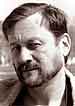
Michael Bronski is the author of
Culture Clash: The Making of Gay
Sensibility and The Pleasure
Principle: Sex, Backlash, and the
Struggle for Gay Freedom. He writes
frequently on sex, books, movies, and
culture, and lives in Cambridge,
Massachusetts. |
| Email: |
mabronski@aol.com |
You are not logged in.
No comments yet, but
click here to be the first to comment on this
Movie Review!
|