|
|
 |
Almodovar's Live Flesh plumbs the connection
By
Michael Bronski
After Women on the Verge of a Nervous
Breakdown became an international hit in 1988, gay Spanish film director Pedro Almodovar was fond of saying in interviews that he "made his movies as though Franco had
never lived." This was, of course, a lie. Almodovar's films-- with their flagrantly anti-authoritarian stances and hypersexual plots-- were a direct response to the new freedoms granted Spanish artists at Franco's death.
Almodovar's films were, if anything, made because Franco lived.
Up until now, however, Almodovar has not made a film that directly addresses Franco's legacy. With
Live Flesh he takes on the question of how fascism plays out in everyday life. And given
Almodovar's obsessions and interests, it's no surprise that sex becomes both the metaphor for repression and redemption.
Live Flesh is based on Ruth Randell's scary psychological thriller of the same name. Almodovar has moved the action from London to Madrid and made substantive changes in the plot. The film begins with
a single mother giving birth to a child in an empty bus late at night on the deserted city streets. It is the 1970s and we are told by an over voice that there is a state of emergency and that people are fearful of leaving their
homes. Surrealistic images juxtaposing birth and the police state resonate throughout the film. The story jumps 20 years, and now the baby, Victor (Liberto Rabal), has become a young man trying to date a skagged-out junkie
named Elana (Francesca Neri), the wealthy daughter of a foreign diplomat. There is a scuffle, the police are called, and one of the cops is shot by his partner, although Victor is blamed for it and sent to prison. The film jumps
another six years and Elana, who is now clean and runs a home for unwanted children, is married to David, who is in a wheelchair. Victor, bent on revisiting the past, begins to insinuate himself in their lives and having an affair
with the wife of the cop who shot David.
As with all Almodovar films, ironies and plot twists move the narrative in unexpected ways. His elaborate, often demented, sense of
mise en scene and startling camera work turn everyday life into
something that resembles a soap opera on acid, or a house of horrors decorated by Martha Stewart. As
Live Flesh's plot revels and unravels it becomes clear that Almodovar was setting us up to view this extravagant thriller in
overtly political terms. All the characters are striving for various kinds of freedom-- often it is sexual freedom, but it is also freedom from violence, from control, and from self-imposed obligations.
Almodovar makes clear that the series of badly-intentioned sexual trysts, betrayals, deaths, and tragedies that ensue from the original scuffles all occurs in light of the characters' lives being overwhelmed
and fucked up by Franco's poisonous political and social effects. The film's sexual politics-- which cover a range of topics from spousal abuse to reproduction to jealousy-- emanate from a vision that is central to all
of Almodovar's work: that sexual freedom and happiness is both a pre- condition to social and political freedom as well as their natural result. The film's final scene is a replay of its opening, but with a very different context
and meaning. We see how profoundly the end of Franco has effected Spain and the everyday lives of people.
This has been the theme of Almodovar's career and is the essence of his gay sensibility. While
Live Flesh does not have any gay characters (although gay viewers will enjoy looking at Liberto Rabal), the
whole film has a gay feel. Partly it is Almodovar's flashy, intricately campy camera work and his inventive use of paradox and irony, but also his ability to explore how sexuality informs all aspects of human life and politics.
As a thriller Live Flesh is terrific-- it has more twists and turns than a Clinton administration scandal, and prettier men as well. It is also one of the best looks at the connections between repression and
desire that we've seen-- on the screen or anywhere else-- in along time.
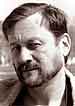
| Author Profile: Michael Bronski |
|
Michael Bronski is the author of
Culture Clash: The Making of Gay
Sensibility and The Pleasure
Principle: Sex, Backlash, and the
Struggle for Gay Freedom. He writes
frequently on sex, books, movies, and
culture, and lives in Cambridge,
Massachusetts. |
| Email: |
mabronski@aol.com |
You are not logged in.
No comments yet, but
click here to be the first to comment on this
Movie Review!
|