Its director's life unveiled!
|
 |
And make film
By
Michael Bronski
Mainly About Lindsay Anderson
by Gavin Lamberty
Knopf
How to order
The big news in Gavin Lambert's memoir Mainly About Lindsay
Anderson(Knopf, 320 pages, $27.50)
is that its author had an affair with super-butch Hollywood director Nicholas Ray, whose
Rebel Without a Cause featured a dreamy Sal Mineo in love with a sexy James Dean.
But this bombshell aside, Gavin has penned a loving, smart, and witty tribute to British film director Lindsay Anderson, the film maker who became famous with films such as the homoerotic
If.... "It was the differences that kept us close" writes Lambert about his old friend film director Anderson. And this joint biography/autobiography is a beautifully written, contemplative meditation on the intersections of art, politics,
and sexuality. Lambert is well know for his novels-- such as
Inside Daisy Clover, which made Robert Redford a closeted homosexual in the film version-- has created a piquant, mostly tell-all, memoir that carefully but
accurately delineates how Lindsay Anderson's troubled personal life was both spark and impediment to his art.
Lambert and Anderson met as schoolboys in the late 1930s. Both were interested in the arts and theater. They later both attended Oxford University and after graduation both worked in theater and film.
Lambert moved to Hollywood in 1956 (after beginning his affair with director Nicholas Ray), but Anderson stayed in England. In short time he became a prominent mover and shaker in the thriving 1960s British theater scene.
After directing the groundbreaking plays of John Osborn (he would later also direct works by Joe Orton, and David Story) he went on to direct important films as
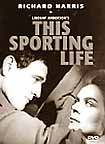
This Sporting Life and If....
But for all of his theatrical and film breakthroughs, Anderson struggled with reconciling himself with his homosexuality and lived a relatively tortured personal life. Lambert here is forthright about his own
sex life-- from his first affair with a man was at age 11, his relationship with director Peter Brook to his later relationships-- and obviously has had no trouble integrating his sexual desire with his everyday life and artistic
vision. But he is both understanding and compassionate about Anderson's inability to deal with his own sexuality.
All too often, Anderson experienced enormous unfulfilled, tormented "crushes" on heterosexual actors such as Albert Finny and Richard Harris (pretty good choices, except for the fact that they
never reciprocated) and never found much emotional satisfaction in his own life.
Lambert never exploits this sexual content but manages to use it to elucidate and illustrate how sexuality and eroticism are inseparable from the creation of art.
He also gives us a insightful and observant exploration into the psychology of artists, as well as a detailed, if very personal, history of an exciting time in British filmmaking and theater.
| Author Profile: Michael Bronski |
|
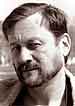
Michael Bronski is the author of
Culture Clash: The Making of Gay
Sensibility and The Pleasure
Principle: Sex, Backlash, and the
Struggle for Gay Freedom. He writes
frequently on sex, books, movies, and
culture, and lives in Cambridge,
Massachusetts. |
| Email: |
mabronski@aol.com |
You are not logged in.
No comments yet, but
click here to be the first to comment on this
Book Review!
|