|
 |
Rebel's bio gives cause to cheer
By
Michael Bronski
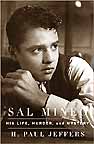
Sal Mineo: His Life, Murder, and Mystery
by H. Paul Jeffers
Carroll & Graf
How to order
Small, sinuous, and sensuous Sal Mineo is now best remembered for his Academy Award-nominated role as Plato, the troubled teen in love with James Dean in the famed 1955 cult film
Rebel Without a Cause. Who could forget the long, lingering looks that Mineo cast towards the older, although equally troubled, boy in the tight jeans and the red jacket? Not to mention the fact that Mineo's character had an eight-by-ten glossy of Alan Ladd on the
inside of his locker door.
But Mineo's career was far more extensive than his most famous role. But the troubled Plato is-- in retrospect-- a stand-in for the performer's own life. Even discounting the fact that he died in 1976 at the age of 37,
victim of a mysterious street stabbing, Mineo's life and career was a Hollywood tragedy of early childhood success and a faltering later period.
Born in 1939 to immigrant Italian parents in the Bronx, Mineo's extraordinary star quality landed him a Broadway role at age 11-- a one-line part in Tennessee's William's
The Rose Tattoo. He was soon the understudy
for Yul Brenner's son in The King and I. After two small roles in films, Mineo catapulted to stardom in
Rebel. He received an Academy Award nomination for his performance in the 1960s epic
Exodus, but his career never hit another high.
By the mid-1960s his career was caught in a schizoid spiral. In 1965 he had the lead as the psycho killer in the small independent film
Who Killed Teddy Bear-- the tag line was "Why with everybody else-- why with
every slob... and not with me?"-- as well as playing Uriah in the dumb-ass epic
The Greatest Story Ever Told.
At the time of his death, Mineo had achieved something of a comeback in a popular Los Angeles revival of James Kirkwood's sexy comedy
P.S. Your Cat is Dead. This led to a new production of the gay-jail-rape
drama Fortune and Men's Eyes, which he also directed.
Author Jeffers was a personal friend of Mineo's and has an easy style and eye for detail. Jeffers clearly has a deep affection for both the man and the performer. He is also a good, sound reporter and has managed to
recreate the performer's life with verve and insight. He is especially good at delineating how the actor's sexuality and intense persona were both a help and hindrance to his career. He also has great, great gossip, which has generally
not been available earlier-- such as the delicious fact that 16-year-old Mineo most probably had affairs with both James Dean
and director Nicholas Ray on the set of
Rebel. (For more on the presumed "very straight" Nicholas
Ray's sex life with men check out Gavin Lambert's new memoir of director Lindsey Anderson,
Mainly About Lindsey.)
Jeffers is also extraordinarily good in detailing the complicated Hollywood politics that controlled Mineo's up-and-down career, especially in regards to his often not traditionally masculine image-- read, gay-- and is
riveting on explicating how homophobia impeded the search for Mineo's murderer.
Fast-paced, informative, witty, and occasionally very insightful, Jeffers's book is the best now out on Mineo, his life, and works.
| Author Profile: Michael Bronski |
|
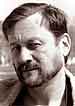
Michael Bronski is the author of
Culture Clash: The Making of Gay
Sensibility and The Pleasure
Principle: Sex, Backlash, and the
Struggle for Gay Freedom. He writes
frequently on sex, books, movies, and
culture, and lives in Cambridge,
Massachusetts. |
| Email: |
mabronski@aol.com |
You are not logged in.
No comments yet, but
click here to be the first to comment on this
Book Review!
|