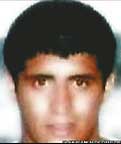
Makvan Mouloodzadeh
|
 |
By
Bill Andriette
Makvan Mouloodzadeh, age 20 by the Western calendar, was hanged by Iranian authorities in the early morning of December 5 at a prison in Kermanshah. He had been convicted in May 2007 on charges of anal rape of
three boys. The acts had allegedly taken place in 2000 in a public park in Mouloodzadeh's hometown of Paveh when he was 13 -- the same age as the boys with whom he was accused of having sex. After reportedly coming
forward to complain to police in September 2006, the alleged victims later recanted their accusations, saying in court that their stories been either made up or coerced by police. Mouloodzadeh as well recanted his confession,
citing police coercion. But on May 25, 2007, Branch Seven of the city's Penal Court convicted him anyway and sentenced him to hang.
T
he case came to the attention of Western human rights groups in the fall and sparked a protest campaign. Activists emphasized that Mouloodzadeh was a minor when the alleged crime took place, and that the alleged
victims had retracted their charges.
The protest appeared to have an effect, and for a time it seemed the execution was called off. On November 14, Iranian Chief Justice, Ayatollah Seyed Mahmoud Hashemi Shahrudi nullified the death sentence as contrary
to Islamic law. He sent the case back to the court in Kermanshah for reconsideration.
"This is a stunning victory for human rights and a reminder of the power of global protest," said Paula Ettelbrick, executive director of the International Gay and Lesbian Human Rights Commission, at the time.
But the lower court simply reconfirmed the sentence without carrying out the required judicial review.
"They are rushing to execute a young man for crimes that even his accusers now admit never took place," said Sarah Leah Whitson of Human Rights Watch in a December 4 statement.
Sexual accusations are often murky, but this one is especially so. A complicating factor may be ethnic bias: Mouloodzadeh's family is Kurdish.
Scott Long of Human Rights Watch's LGBT rights program, questioned whether making the youth's case a gay-rights
cause célèbre was the right strategy.
"[A]nnouncing publicly how international pressure has swayed Iranian authorities often backfires and makes different factions in the confusion of Iranian politics determined to show that international pressure hasn't
swayed them," he wrote after the hanging. "Saying a 'homosexual' had been pardoned very possibly didn't help. Sometimes discretion is honestly the best seal of triumph."
Journalist Doug Ireland, writing in New York's
Gay City News, quoted Mitra Khalatbari, a reporter with Tehran's
Etemade Melli newspaper, who had closely followed the case. She said that authorities in Kermanshah broke the
law as they rushed to execute the young man. "The execution order specified that he was to be hanged in the public park in Paveh where the so-called rapes had been committed -- that would probably have happened on a
'public day,' like the coming Friday," she said. "Instead, he was hastily executed in secret, on Wednesday, in the Kermanshah Prison," without notification of the condemned man's lawyer or family, as the law also requires.
"Thus, Makwan was not allowed to say goodbye to his family, nor were there any plaintiffs present at the place of execution with whom Makwan could plead for his life and ask their forgiveness to escape death."
| Author Profile: Bill Andriette |
| Bill Andriette is features editor of
The Guide |
| Email: |
theguide@guidemag.com |
You are not logged in.
No comments yet, but
click here to be the first to comment on this
News Slant!
|