
June 2000 Cover
|
 |
Et stupendus!
By
Michael Bronski
Gladiator
Directed by Ridely Scott
Starring Russell Crowe, Joaquin Phoenix, Connie Nielsen, Oliver Reed, Djimon Hounsou, Derek Jacobi
How to order
Oh, the cruelties of Ancient Rome. How horrible, how delightful!
Was it simply an accident-- or willed by the Gods-- that muscle-man-turned-"actor" Steve Reeves died the day before the release of
Gladiator, Ridley Scott's mega-spectacle of Roman Empire
brutality? Reeves (who appeared in several issues of
Physique Pictorial in the mid-1950s) was the first of the sword-and-sandal superstars when he appeared in Joseph E. Levine's 1959 spaghetti-spectacular
Hercules. Although his acting was as wooden as his pecs were impressive
Reeves defined for film audiences a new type: the sexy hunk of ancient times who flexed beautifully as he struggled with near-naked enemies and lip-synched his lines in a mesmerizing monotone. And
for homos, Hercules and all of his many imitators were glorious fantasy material brought to the big screen in living color. They were
Physique Pictorial in the flesh. Jerk-off material for years to come and come and come.
Now, with his death, Reeves has passed the torch onto Russell Crowe, the star of
Gladiator. And Crowe runs quite nicely with it. If Levine's
Hercules was made on the cheap (although it has a lovely
high-style Technicolor look), Scott's
Gladiator is big-time film making. Little expense was spared on brutal battle scenes, overflowing Roman Coliseum scenes, and so little clothing for so many of the male performers. Yes, if you
want to see naked, muscular men hacking away at one another,
Gladiator delivers. And it even has a story-- and a fairly complicated one at
that.
Maximus (Russell Crowe) is the leading General and confidante to Emperor Marcus Aurelius (Richard Harris). During some endless Empire-building war in Germany, Marcus Aurelius becomes ill and
tells Maximus that he is to be the next Emperor, and his task is to being back to Republic to the Roman people. Alas, such democracy-manufacturing is not to happen quickly, because Marcus Aurelius's insane, power-hungry
son Commodus (Joaquin Phoenix) wants in on the family business and kills his father (quietly), and takes over. He also demands the death of Maximus and his family. Maximus escapes, but his son and wife are brutally
murdered, and the ex-General, now on the run, swears vengeance. This becomes complicated because Maximus once loved, and is still loved by, Lucilla (Connie Nielsen), the sister of Commodus. She looks as though she may be in
on the whole dirty deal with her brother, but maybe she is just on the lookout for her young son who is next in line to be Caesar. Well, Maximus runs into the wilderness, is picked up by slave traders who specialize in
supplying fighters for gladiator games, and is trained by Proximo (Oliver Reed) who
used to be a gladiator, but was freed by Marcus Aurelius (unlike
Hercules, Gladiator has a plot). Maximus, of course is a great gladiator because
he was a great solider and soon everyone-- including Juba (Djimon Hounsou), Maximus's new friend and fellow gladiator from Ethiopia-- go off to Rome where the lot continues.
Rome is a mess because Commodus is corrupt and mean and wants to sleep with his own sister and is offering bread and circuses to keep the city's citizens' minds off of the Senate and democracy.
Maximus becomes such a hit that even when his real identity is exposed and he swears vengeance against the Emperor in front of all of Rome, Commodus cannot get rid of him. This leads to a series of plots and counterplots in
which Maximus and Commodus-- along with various relatives and Senate members especially Gracchus ( Derek Jacobi, as a cranky old queen)-- attempt to get rid of one another. It is the corrupt power of the state vs. the
corrupt power of the popular approval. Guess who wins.
As written by David H. Franzoni and John Logan,
Gladiator mixes a nifty dysfunctional family plot with some standard revenge stuff, and a frail, but appealing political analogy as well.
Gladiator has intelligence, wit, and more than a dollop of integrity. It also has lots of well-built men battling one another all the time, and pretty amazing action sequences that startle as much as they make you cringe with their
full-fledged violence of heads flying off and limbs being severed.
In the older films we were always kept at a distance from the fighting by medium and long shots. It was nice to see the half-naked bodies going at one another, but it was spectacle. We lose that here, but
what we gain is the excitement of not being closer to the action, but being right in it. The film's early battle scenes are disorienting and scary. Scott cuts back and forth from standard fighting to well-managed,
computer-generated clasps that being us right into the middle of things. This is true again of the gladiator scenes. Here the flash of flesh and the blaze of blood becomes excruciatingly real and close. This, in turn, makes the sexual excitement
of the whole endeavor-- if one is, indeed, prone to that sort of feeling-- quite electrifying:
Physique Pictorial on acid, with hardly anything virtual about it. Although it is a little too long at two-and-a-half hours, and some of
its plot makes only vague emotional sense,
Gladiator delivers in a way that I think would have made Steve Reeves proud. And it certainly jacks up the sexual volume on the use and abuse of the (mostly) naked male b1ody
in contemporary cinema.
| Author Profile: Michael Bronski |
|
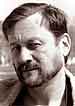
Michael Bronski is the author of
Culture Clash: The Making of Gay
Sensibility and The Pleasure
Principle: Sex, Backlash, and the
Struggle for Gay Freedom. He writes
frequently on sex, books, movies, and
culture, and lives in Cambridge,
Massachusetts. |
| Email: |
mabronski@aol.com |
You are not logged in.
No comments yet, but
click here to be the first to comment on this
Movie Review!
|