|
|
 |
Books from Times Square to Lincoln Center
By
Michael Bronski
Saul's Book (Masquerade Books, paper, 445 pages,
$7.95), by Paul T. Rogers, is a lost classic of contemporary gay fiction that has just resurfaced. The publishing world often focuses on the trendy, slick,
and banal. This book recalls the radical idea that gay literature can be powerful, important, and breathtaking.
Saul's Book was written in the late 1970s, when its author was imprisoned in Sing-Sing for a variety of petty, violent crimes. It was turned down by more the 15 mainstream publishers and was finally
published in 1983 by Pushcart Press, and went on to win New York's Editors' Book Award-- a prize judged by many of the editors who rejected the book in the beginning.
But it's no surprise that Saul's
Book was a hard sell to the mainstream. Brutal, violent, and highly literate, it tells the story of Saul, a petty crook, who begins a troubling, loving, and dangerous affair
with Sinbad, an under-age Times Square hustler. Sinbad needs and distrusts Saul as much as the older man needs and distrusts him.
Rogers's storytelling style is beautiful and heady-- a mixture between Melville and street jive, the Bible and William Burroughs. While much of the book is a hymn of highly ambivalent praise to New
York street life, pimps, drug dealers, and crime, this evocation of Genet is offset my the passionate love story between the man and the boy, who keep changing places as hunted and hunter, the desired and the desirer.
Rogers captures with grace and fire the slang and fast-talk of the street, transforming it to poetry. The fury of the characters-- and the extremities of their situations-- raise the narrative of
Saul's Book to somewhere between Jacobean drama and a true-crime detective novel.
But while we are caught in the crossfire of high and low art, of damnation and redemption, we realize that
Saul's Book-- like all great literature-- transcends genre and even classification. There is
nothing soothing about this novel-- it is a rough and unsettling story, told with brutal honesty and unerring grace. But it is also an experience that makes us remember what it is like to be in the presence of a genius and to be moved
by the written word in ways that don't seem possible.
Opera is a mainstay of the gay male sensibility. The opera queen with his passions and his opinions is as much a part of gay life as the hustler, the hair queen, and the clothes queen.
But what is it about opera that attracts gay men? The emotional, passionate music, of course, the extravagant costumes, and the glory of all that drama. If society insists you must be silent about your
emotions and who you love, why wouldn't you adore people on stage whose only purpose is simply to declare-- in gorgeous voice-- their passions and desires? Opera, on the simplest level, gives voice to the love that dare not speak
its name.
Sam Able, in Opera in the Flesh (Westview/Harper-Collins, paper, 235 pages, $17.95)
looks at opera from a distinctly gay perspective. While he ascribes to the theory that opera gives voice
to sexual and emotion feelings we are told to keep under wraps, he is interested in much more as well. The book's subtitle is "sexuality in opera performance," and Able is determined to connect the very act of singing with
not only sexual desire but sexual activity. Simply put: when whoever is singing Gilda in
Rigletto hits that incredibly beautiful high note at the end of "Cara Nome," she is not only not only expressing her love for the Duke,
but coming as well. For Able, opera's music not only approximates physical sexual activity, it transports us emotionally, mentally, and sometimes even physically, the way that sex does. Well,
should, at any rate.
Able also speaks at length at how the dramatic plots of opera-- filled with love lost, betrayal, redemption, and rejection-- create a wide terrain of emotional territory in which gay men, and others, fill in
their own fantasies. If we have to believe that a 38-year-old German singer is really a 15-year-old Japanese courtesan madly in love with a 30-year-old American naval lieutenant played by a 50-year-old French tenor, we can
easily believe in the validity and the intensity of our own sexual imagination.
Opera in the Flesh is smart, witty, and full of fascinating details. Able's prose is clear, although he does presume a basic-- and at times extensive-- knowledge of opera plots, form, and history. But with this
in mind Opera in the Flesh is one of the most informed and challenging books about gay men and music, or gay culture generally, to appear in a long time.
| Author Profile: Michael Bronski |
|
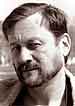
Michael Bronski is the author of
Culture Clash: The Making of Gay
Sensibility and The Pleasure
Principle: Sex, Backlash, and the
Struggle for Gay Freedom. He writes
frequently on sex, books, movies, and
culture, and lives in Cambridge,
Massachusetts. |
| Email: |
mabronski@aol.com |
You are not logged in.
No comments yet, but
click here to be the first to comment on this
Book Review!
|





