A second U.S. capital?
|
 |
By
Jim D'Entremont
In an address at
the George H.W. Bush Presidential Library on December 6, 2007,
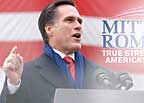
Republican presidential candidate Willard Mitt Romney insisted that
he, like John F. Kennedy before him, does not "define my candidacy
by my religion." Commentators labeled the speech, entitled "Faith
in America," Romney's "Kennedy moment."
But when Democratic
candidate John F. Kennedy, a Roman Catholic, appeared before the
Greater Houston Ministerial Association during the 1960 presidential
campaign, the thrust of his speech was an assurance that his faith
would not intrude on matters of policy. Although Romney, a Mormon,
asserted that "no authorities of my churchƒ will ever exert
influence on presidential decisions," he segued into a paean to
"our religious heritage," revealing an intent contrary to
Kennedy's.
R
omney assured his
listeners that because belief in God has always been central to the
American way of life, religion would occupy a place of honor during
his presidency. Kennedy was addressing an audience concerned with
preserving the U.S. Constitution's wall of separation between
church and state. Romney's speech was pitched to evangelicals
worried about, in his words, "a new religion in America -- the
religion of secularism" and "the elimination of religion from
the public square." Kennedy promised to keep religion out of the
White House; Romney promised to welcome it in.
When Romney told his Texas
audience, "I believe that Jesus Christ is the Son of God and the
Savior of mankind," he was seeking to reassure Protestant skeptics
that the Mormon church, the Church of Jesus Christ of the Latter-Day
Saints (LDS), is simply another form of Christianity. He mentioned
"my Mormon faith" only once, and said almost nothing about
Mormon doctrine -- not a word about pre-existence, posthumous
baptism, sacred garments, blood atonement, Nephites, Lamanites, the
coming apocalypse, the Millennial reign of Christ in Missouri, the
transformation of men into gods, or any of the other practices and
beliefs unique to the LDS Church. Because evangelical Christians --
whose votes are now indispensable to any serious Republican
candidate -- regard the LDS Church as heretical and possibly
Satanic, Romney chose his words with care.
"Romney was just
being a politician," says Olin Thomas, executive director of
Affirmation: Gay and Lesbian Mormons. "He was trying to reassure
people without reminding them that yeah, he's really a Mormon."
Thomas's
organization, founded in 1977 in response to Mormon efforts to stamp
out homosexuality (see box), offers support for GLBT present and
former LDS members grappling with the innate homophobia of a
religion that gives special primacy to heterosexual marriage and
reproduction.
LDS Church doctrine
condemns gay and lesbian sex, masturbation, and other forms of
non-reproductive sexual activity. Mormons believe the human body
serves two purposes: facilitation of the spirit's necessary
passage through earthly existence, and procreation. The latter is
the exclusive province of a man and woman sealed in marriage "for
time and eternity." Mormon marriage continues in the afterlife. At
the Second Coming of Christ, Mormon couples will be resurrected
together.
The family is the
basic building block of Mormon society, and the bedrock of the
12-million-member Church's pyramidal structure -- congregations
called wards, aggregates of wards called stakes, and
upward to the Quorum of the Twelve Apostles and the First
Presidency. The LDS Church urges weekly Family Home Evenings that
combine togetherness with indoctrination. Abortion is forbidden; a
teeming household is the ideal. The belief that each birth liberates
a soul from the spirit world has helped nudge Mormon-dominated Utah
toward the highest birth rate in the nation. The Family: A
Proclamation to the World, issued by the First Presidency in 1995,
calls the traditional family "central to the Creator's plan for
the eternal destiny of His children."
Mitt Romney's wife, five
strapping sons, and eight grandchildren seem to indicate a firm
commitment to that plan. Romney nevertheless reached out to gay
activists when, in the course of his failed bid for the U.S. Senate
in 1994, he sold himself to the Log Cabin Club as a more vigorous
defender of gay rights than Ted Kennedy, his opponent. But when, in
2004, during his tenure as Governor of Massachusetts, Romney found
himself presiding over the first state to legalize gay marriage --
an embarrassing position for a Mormon bishop and honors graduate of
Brigham Young University (BYU) -- his condemnation of same-sex
unions came swiftly. His subsequent efforts to have same-sex
marriage banned by constitutional amendment are more consistent with
LDS teachings than his previous then-politically-convenient state-
ments about discrimination -- statements from which he now seeks to
distance himself.
"Much of the
discrimination that occurs here in Utah is silent," notes gay
ex-Mormon Duane Jennings, who cochairs a chapter of Affirmation in
the Mormon bastion Salt Lake City. "It takes the form of ignoring
gay people, pushing them into the margins, passing them over for
promotions, that sort of thing."
Mormons seldom have much
to say about homosexuality for non-Mormon consumption; their history
of anti-gay witch hunts and electroshock therapy is not readily
acknowledged. Pressed on the subject of gay rights by talk show host
Larry King in a 2004 interview, Church President Gordon B. Hinckley
would only say, "The fact is, they have a problem."
Christ's
American itinerary
Joseph Smith, the founding
prophet, had nothing to say about homosexuality at all. Smith
created the Church of Jesus Christ of the Latter-Day Saints in
Palmyra, New York, in the 1820s, a time of rampant religious
conversion and sectarian ferment. Smith claimed that in 1823, the
angel Moroni appeared to him and led him to the burial site of
golden plates inscribed with the Book of Mormon. The plates had been
hidden by the Nephites, one of two warring strains of a lost tribe
of Israel that arrived in the New World in 589 B.C.E. Moroni, a
former mortal, was the son of Mormon, the 4th century C.E. prophet
who recorded the sacred text. With the aid of Urim and Thummim,
seeing stones embedded in an ancient breastplate, Smith was able to
translate the ancient Hebrew script into English. The process took
seven years, at which point, according to Smith, the plates were
returned to Moroni.
The Book of Mormon
was first published in 1830. Mark Twain famously called it
"chloroform in print"; the volume has more recently been dubbed
"the Monty Python version of the Bible." It is not, however, a
replacement for the Bible, but a supplement to the Old and New
Testaments.
The book tells the story
of the followers of Lehi, Israelites who set sail from the shores of
the Red Sea and made their way to North America, where a schism
occurred. Lehi's sons Nephi and Laman became rival patriarchs. The
dark-skinned Lamanites, purported ancestors of present-day Native
Americans, eventually overwhelmed and massacred the fair-skinned
Nephites in a fierce battle that took place in 385 C.E. in what is
now the western part of New York state. Despite the lack of even the
flimsiest archaeological evidence, the historical truth of the Book
of Mormon has widespread acceptance among members of the LDS Church.
Moving from New York to
Ohio, Missouri, and finally Illinois, Smith managed to convince
thousands of followers that the Book of Mormon and other writings
were products of divine revelation. Along the way, the homespun
prophet instituted practices that enraged many Gentiles (his
standard term for non-Mormons) and inspired others to convert.
According to the official
LDS Doctrine and Covenants, Section 132 (published in 1843), Smith
instituted polygamy in 1842, following a vision in which Christ
sanctioned "plural marriage" in imitation of the polygamous
arrangements of Old Testament patriarchs. By the time of his
assassination in 1844, Smith had taken an undetermined number of
wives. His successor, Utah pioneer Brigham Young, had at least 26
wives and perhaps as many as 51. Most Mormon practitioners of plural
marriage took its Old Testament resonance seriously, but to
anti-Mormon Gentiles, it amounted to institutionalized lechery. Such
unions did, at any rate, accelerate the creation of fresh supplies
of Mormons.
Polygamy interfered with
Utah's prospects for statehood, and was finally disavowed in 1890.
The Church's ban on multiple wives was reinforced in 1904, and
again in 1910, though many Mormons who had already entered into
plural marriage continued their cohabitation. Among mainstream
Mormons, such marriages now constitute grounds for excommunication,
but splinter groups often identified as "Mormon fundamentalists"
(see The Guide, February 2007) continue to justify polygamous
households with Biblical rationales.
Much of the appeal
of Mormonism from its inception was the way it slipped Old World
Judeo-Christian lore into New World contexts. The Book of Mormon and
other prophetic writings of Joseph Smith and his successors --
especially the Doctrine and Covenants and the Pearl of Great Price
(1851)„not only brought lsraelites to the New World and restored
Old Testament forms of marriage, they placed the Garden of Eden in
Missouri, gave the resurrected Christ an American itinerary, and
offered the promise of a North American Second Coming. They nurtured
the nativist belief that the United States occupied sacred ground
and had a divinely ordered destiny. According to Brigham Young,
Smith predicted that a "time will come when the destiny of the
nation will hang upon a single thread. At that critical juncture,
the [LDS] people will step forth and save it from the threatened
destruction." This so-called "White Horse prophecy" is
controversial among Mormon scholars, but does seem authentically
indicative of Joseph Smith's vision.
The missionary
position
Mormons believe we are in
the Latter Days of a world on the brink of apocalyptic events
heralding the Second Coming of Christ. (See "The End is Near.")
Although Mormons do not share the Endtime vision of fundamentalist
Christians awaiting the Rapture, they believe in a version of
Armageddon, the final battle that will engulf the world. Despite a
slight softening of anti-gay rhetoric in the 2007 pamphlet God
Loveth His Children, the LDS Church's latest publication on gay
issues, many Mormons still consider gay visibility symptomatic of
the wickedness expected to pervade the world before Christ returns.
The 53,000 Mormon
missionaries who now serve in 162 countries are the foot soldiers of
the Church, confronting wickedness in strange lands -- and once,
memorably, at the Guide office in Boston, where a pair of
proper young men dropped in to proselytize and were asked about
masturbation, prompting red-faced denials that such a sin would ever
be indulged.
The required
two-year missionary stint is a serious formative experience that
sometimes results in unintended discoveries. In 2004, student
photographer Don Farmer caused an uproar when a pride art exhibit at
Salt Lake Community College included three photos from a series
depicting a pair of Mormon missionaries kissing, snuggling, and
undressing each other. The pictures, which struck a nerve, were
finally stolen.
"When they're at their
sexual peak," a Salt Lake City lesbian once told this writer,
"young Mormon men are sent out in pairs to do missionary work in
strange places where they're one another's chief emotional
support. The result is, whenever there's an LDS General Conference
in Salt Lake, the gay bars are filled."
A Church elder at 18, Mitt
Romney fulfilled his missionary duties in France before attending
BYU. The enormously wealthy management consultant, son of the late
Michigan governor and sometime General Motors chief executive George
Romney, is now applying his missionary skills to well-funded forays
into presidential primaries.
Romney isn't the
first LDS presidential candidate. The first Mormon to launch a
presidential campaign was Joseph Smith himself, in 1843. Mitt's
father attempted a run in 1968, and lost the Republican nomination
to Richard Nixon, who appointed him Secretary of Housing and Urban
Development for the duration of his first term. Senator Orrin Hatch
(R.-Utah) made a short-lived presidential bid in 2000, losing the
nomination to George W. Bush. Despite his defeat in the January 3
Iowa caucuses by evangelical favorite Mike Huckabee (a
fundamentalist who is apparently not required to give a
church-and-state speech of his own) Mitt Romney remains the first
Mormon to have a serious shot at the White House -- a point
underscored by his win in the Michigan primary on January 15.
"Romney is supported
heavily by the LDS Church," notes David Melson, a gay practicing
Mormon. "If he's elected, the Church's political stances will
certainly enter into policy. But if we want a Mormon in the White
House, I think we could do better. Romney flip-flopped all over the
place on gay issues when he was governor of Massachusetts."
"Romney couldn't
establish a theocracy if he wanted to," adds Affirmation's Olin
Thomas. "But I think Mormons are likelier than Catholics to view
the pronouncements of Church authorities with reverence, and to obey
them. It's a serious concern."
You are not logged in.
No comments yet, but
click here to be the first to comment on this
Magazine Article!
|