February 2008 Cover
|
 |
By
Michael Bronski
About My Life and the Kept Woman
by John Rechy
Grove Press
How to order
John Rechy is an enduring
pillar of gay literature. His first novel, City of Night, was
published in 1963 -- more than a half-decade before Stonewall.
Since then, Rechy has constantly been in public view, publishing 12
more novels (including the groundbreaking Numbers in 1967),
as well as a book of social criticism, The Sexual Outlaw
(1977), and Beneath the Skin in 2003. It's difficult to
image these days the impact that City of Night had when
released. Sure, there was already a wealth of gay writing published
by mainstream American presses before 1962. But City of
Night was something different: overtly gritty, it was a
street-level view of gay life, the story of urban hustlers and their
cross-country migrations.
A
t a time when gay
novels tended to come out of specific literary traditions --
variations on the postwar novel or the pastoral American romance --
Rechy's debut marched to the tattoo of the Beats and the lure of
the open road. But unlike Jack Kerouac's heroes, who sought
freedom by going "on the road," Rechy's men attempt to define
themselves, and assert their masculinity, by having sex with other
men and claiming as their territory the crevices of urban decay.
Rechy took his
title from James Thomson's famous 1880 poem "The City of
Dreadful Night" that was a despairing hate-letter to London. Rechy
erased the "dreadful" of the original, but it was certainly
implied in his book's narrative. While all of his characters are
on the run to find themselves, unlike Kerouac's, few ever do. The
city's pall and American culture's lovelessness (the
heterosexuals we met here are similarly lost) preclude any real
happiness. It was a first major step that American gay fiction took
to realism.
Rechy has written
autobiographically in the past; certainly readers were led to
believe that large portions of City of Night, Numbers, and
Sexual Outlaw were based on personal experience. But the new
About My Life and the Kept Woman (Grove Press, 329 pages, $24) is
overtly a memoir. Rechy tells about growing up as a Mexican-American
in El Paso, Texas, and trying to figure out what it means to be, not
just a gay man in American of the 1950s, but a Latino living in a
country filled with racism. Although Rechy, the book's narrator,
does go on a series of journeys here -- from poverty to the world
of Anglo literature, to the U.S. Army and Korea, from a student of
writing to a published author -- the overall thrust of the memoir
is less a bildungsroman than a personalized social history of
aspects of the U.S. during the 1950s and the 1960s. You could sum it
up as a portrait of the artist as a young homosexual Latino man.
Rechy has never
been a great prose stylist, although he can shape and work with
words in wonderful ways. His strength is the sheer force of honesty
conveyed by prose that is plain and urgent. We are caught off-guard,
and seduced, by his seeming simplicity and drive to tell his story.
Here John Rechy
comes full circle. Most of the last third of About My Life and
the Kept Woman details the writing and publication of City of
Night -- a book that was so shocking to some at the time that a
famously panicked review in The New York Review of Books even
doubted that the author existed, implying that the novel was really
an in-house job by hack pornographers at Grove Press. Reading of
Rechy's literary studies and ambitions we get a sense of what City
of Night means to both him and the American literary canon.
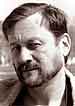
| Author Profile: Michael Bronski |
|
Michael Bronski is the author of
Culture Clash: The Making of Gay
Sensibility and The Pleasure
Principle: Sex, Backlash, and the
Struggle for Gay Freedom. He writes
frequently on sex, books, movies, and
culture, and lives in Cambridge,
Massachusetts. |
| Email: |
mabronski@aol.com |
You are not logged in.
No comments yet, but
click here to be the first to comment on this
Book Review!
|





