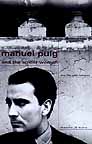
The films behind the man
|
 |
A biography of Manuel Puig
By
Michael Bronski
Manuel Puig and the Spider Woman
Farrar, Straus, Giroux; cloth; $27.50
How to order
Manuel Puig is best known as the author of The Kiss of the Spider
Woman, a quirky, highly literary meditation on the effect of movies on the everyday. The power of Puig's vision-- in which a seemingly frivolous movie
queen and straight macho radical meet in prison and affect each other profoundly-- was so great that his novel translated beautifully to the stage as a dramatic play, to the screen (with Raul Julia and William Hurt), and into
a Broadway musical. The complicated intersections between life, politics, and movies which are at the heart of Manuel Puig's 1976 novel are also at the center of Suzanne Jill Levine's captivating and elucidating biography
of Puig, Manuel Puig and the Spider Woman
(Farrar, Straus, Giroux; cloth; $27.50).
Born to a middle class Argentine family in 1932, Puig was fascinated with movies at a young age. During high school he planned to become a film director, but eventually turned to writing fiction.
Not surprisingly, his novels-- Heartbreak
Tango, Betrayed by Rita Hayworth, Kiss of the Spider
Woman-- were filled with variations of the themes that haunt his favorite Hollywood movies. Levine was a personal friend of
Puig's and worked closely with him on the English translations of his work. This proximity give her an up-close vantage point to examine the novelist's life, and she does a terrific job delineating Puig's cultural and
political influences-- including novelist Julian Green, as well as Freud, and Hitchcock.
But she also makes a very strong case that Puig-- who died, amid rumors of AIDS, in 1990-- was as obsessed with politics as with Hollywood and expresses his strong reactions to Juan Peron and
other manifestations of fascism. While Levine is perceptive when discussing the impact of Puig's homosexuality and the influence of both North and South American gay culture on his writing, she feels on surer ground
when discussing the novelist's relationship with his family than when discussing his sexual relationships. But this is a minor failing-- interested readers should read Jaime Manrique's 1998
Eminent Maricones for this side of Puig's life-- and Levine has provided us with a new look into the mind and art of a great writer.
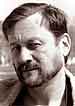
| Author Profile: Michael Bronski |
|
Michael Bronski is the author of
Culture Clash: The Making of Gay
Sensibility and The Pleasure
Principle: Sex, Backlash, and the
Struggle for Gay Freedom. He writes
frequently on sex, books, movies, and
culture, and lives in Cambridge,
Massachusetts. |
| Email: |
mabronski@aol.com |
You are not logged in.
No comments yet, but
click here to be the first to comment on this
Book Review!
|