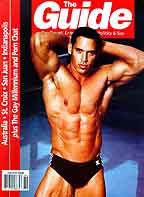
January 2000 Cover
|
 |
Not for gay cinema
By
Michael Bronski
Wizard of Oz
Starring Judy Garland
How to order
Trick
starring Tori Spelling
How to order
The Karen Carpenter Story
Tom Haynes, director
How to order
The Haunting
Directed by Jan DeBont, Liam Neeson; starring Liam Neeson, Catherine Zeta Jones
How to order
How to order
Swoon
Tom Kalin, director
How to order
South Park: Bigger, Longer, Uncut
Directed by Matt Stone, Trey Parker
How to order
Relax... It's Just Sex
starring Jennifer Tilly
How to order
Poison
Tom Haynes, director
How to order
Paris Is Burning
Jennie Livingston, director
How to order
Looking for Langston
Isaac Julian, director
How to order
How to order
Go Fish
Rose Troche, director
How to order
How to order
Flawless
Starring Robert Deniro, Philip Seymour Hoffman
How to order
Fight Club
Directed by David Fincher; starring Edward Norton, Brad Pitt
How to order
Eyes Wide Shut
Directed by Stanley Kubrick; starring Tom Cruise, Nicole Kidman
How to order
How to order
Boys Don't Cry
Directed by Kimberly Peirce; starring Hilary Swank, Chloë Sevigny
How to order
Being John Malkovich
Starring John Cusack
How to order
How to order
Bedrooms and Hallways
Rose Troche, director
How to order
Beautiful Thing
Hettie MacDonald, director
How to order
Apt Pupil
Directed by Bryan Singer; starring Ian McKellen, Brad Renfro
How to order
American Beauty
Directed by Sam Mendes; starring Kevin Spacey, Annette Benning
How to order
All About My Mother
Directed by Pedro Almodóvar; starring Cecilia Roth, Marisa Paredes
How to order
How to order
As the century ends we would hope that the future of queer arts and film would burn brighter than ever. After all, since Stonewall, gay and lesbian artists have
had increasing permission to bring their myriad visions into being. And these visions were greeted with love, criticism, and intense enthusiasm by an enormous
audience ready and eager to see their lives represented. But looking at the gay films and themes of the past year-- just under 60, counting independents, foreign, and Hollywood
movies-- that bright promise seems to have flickered and nearly burnt out. For the most part the state of queer film in 1999-- with a few major exceptions-- was dismal.
Nearly a decade ago it looked as though we were about to enter into a Renaissance of gay and lesbian film making. Unable to have access to mainstream
movie making, independent film makers, writers, and producers began turning out a remarkable body of work. Todd Haynes's brilliant
The Karen Carpenter Story and
Poison, that moved a gay sensibility to new levels of cultural critique and intelligence, were revelations, as was Tom Kalin's queer re-telling of the Leopold and Loeb story
in Swoon. Rose Troche's Go Fish and Isaac Julian's
Looking for Langston broke new territory and Jennie Livingston's
Paris is Burning expanded the very parameters
of what a queer documentary might do. It was an exhilarating moment in queer culture. But since then it has been down hill.
This past year has seen a progression of these trends-- all down-hill. Even at their best, independent gay films were unadventurous and limited in their
imagination. While Edge of 17 had a few bright moments it felt like a 20-minute short that had been blown out of proportion. The British
Get Real was sweet, but came no where close to the perceptiveness or potency of 1997's
Beautiful Thing. Relax... It's Just
Sex had some interesting moments, including a plot twist that dealt with
sexualized murderous rage that followed a queer-bashing, it was a mess of a film that had no consistent center.
Trick, on the other hand epitomized what is wrong with
gay independent cinema. With its cute boys, pre-packaged ghetto humor, and edgy-but-sentimental sex it is homo-genized, formulaic, and empty. This is a film that not
only casts Tori Spelling as a gay joke, but has to drive home the point with a Tori drag-look-a-like.
Beefcake-- a faux documentary about Bob Mizer and
Physique Pictorial-- had flashes of humor, but ultimately little point. Even Rose Troche-- whose
Go Fish showed so much promise-- failed with
Bedrooms and Hallways, a light, sprightly look at love, friendships, and sex in London that never rose above standard sit-com quality.
Of course all of these films were better than the creepy homophobia that emerged in some of the bigger Hollywood films.
The Haunting brought up lesbianism, but never had the nerve to do anything with it and left us wondering what was going on to begin with. And while Alan Cummings who had scored such a huge hit in
the New York production of Cabaret, garnered some laughs as a libidinal desk clerk in
Eyes Wide Shut his whole scene simply reflected the creepy sex-hating tone of
the entire film. Even worse was American
Beauty with its glib pseudo-critique of middle-class suburbia (yawn) and its ultimate horror of the
repressed-violent-ex-Marine-homo-next-door who offs the film's main character after his sexual advances have been rebuffed. This guy is so bad that he even collects Nazi memorabilia, but
nothing butch like grenades or machine guns: he collects plates from Hitler's
dinner parties. (Is this a new trend: Apt
Pupil made the same cheap, and inflammatory,
connections between Nazism and homosexuality last year?)
The one remarkable trend this year-- in both independent and mainstream films-- is the emergence of transgendered characters and themes. These have ranged from the
third-rate The Adventures of Sebastian Cole in which a teen boy learns to deal with his trannie dad, to the groundbreaking
Boys Don't Cry fictionalization of the Teena Brandon
story. In between we have Philip Seymour Hoffman's transgendered drag queen in
Flawless, the quirky sort-of-transgendered lesbian love story in
Being John Malkovich, and the always brilliant and confounding sexual politics of Almodovar in
All About My Mother. On one level all of these films evidence a new, far more sophisticated approach
to portraying the complexities of gender and sexuality, with the best of the
lot-- Boys Don't Cry-- never shying away from the harder issues. But the easy sentimentalization
of Sebastian Cole and the hip jokiness of
Malkovich points to the reality that trangenderism could easily become the cheap gimmick that drag became in films like
Priscilla, Queen of the Desert.
So where are queer films now? What can we expect after this year?
Well, the brightest, edgiest and most satisfying "gay" movies were quirky Hollywood products or foreign films.
Fight Club-- which is brilliant in its first hour and then
falls apart-- is as intelligent, shocking, sexy, and serious look at the intersections of homoeroticism, male identity, violence, and freedom as we have every seen in a mainstream
film. On a less serious, but just as political, register is
South Park. Beneath its dare-to-be-as-bad-as-possible and fuck-you attitudes about offending cultural bourgeois and Babbits,
it exhibits a razor-edged wit and political sensibility that shocks as much as it assaults us. Here we have a sub-plot in which Satan and Saddam
Hussein are lovers-- but their real problems are that Saddam just wants sex and doesn't show enough affection to his honey.
South Park's use of homosexuality and queerness is open and forthright. It
is not a case of making-fun-of-everything (which is always a lame argument, usually used to excuse misogyny or racism) but of accurately understanding how
stereotypes and power relationship work.
Perhaps the best non-US gay themed film was the Australian
Head-On about Greek immigrants living in Sydney and the struggles of a young gay man to come
to terms with his sexuality in a subculture and a society that values his maleness but not his queerness. Exploring issues of exile, national identity, sexual desire,
violence, and gender, Head-On pushes boundaries and buttons-- the sex scenes, always tinged with violence and discontent, are both shocking and arousing-- and makes us
think more than most films do.
Movies are queer. Even when there have not been gay or lesbian characters, or plots or themes, movies have offered homosexuals a vision into fabulous,
imaginative worlds that break us from the straits of the "normal": think of
The Wizard of Oz. Sometimes, when we are lucky, we can see films that deal directly with queer
characters and convey some sense of the reality we inhabit. What we have been calling
gay films all too often are overly-simplistic, pre-packaged, pre-sold commodities
fashioned to appeal to the lowest common denominator. We deserve better.
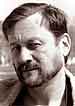
| Author Profile: Michael Bronski |
|
Michael Bronski is the author of
Culture Clash: The Making of Gay
Sensibility and The Pleasure
Principle: Sex, Backlash, and the
Struggle for Gay Freedom. He writes
frequently on sex, books, movies, and
culture, and lives in Cambridge,
Massachusetts. |
| Email: |
mabronski@aol.com |
You are not logged in.
No comments yet, but
click here to be the first to comment on this
Movie Review!
|