Dangerboy
|
 |
Young homos you don't want to cross
By
Michael Bronski
Skull and Bones
Directed by T.S. Slaughter
How to order
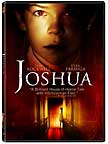
Joshua
Directed by George Ratliff
Starring Sam Rockwell, Vera Farmiga, Celia
Weston, Michael McKean, Dallas Roberts
How to order
Children are queer. They're not yet programmed into behaving "appropriately," not frightened and bullied into not speaking their minds and acting in their own self-interests, and often resistant to the unfairness and idiocies of adult demands. When they do voice a contrary opinion they're told they are "bad," "misbehaving," or "disobedient." Culturally we've never really dealt with the outsiderness of children. And we hardly ever hear any public discussion of "queer" children -- that is, "queer" specifically in a sexual sense.
Films, luckily, have long given us hints of both. Consider the 1952 Member of the Wedding. Here the protagonists were Frankie, a 14-year-old tomboy played by Julie Harris, and John Henry, an eight-year-old sissy-boy played by Brandon de Wilde. They vividly portray the pain of being queer in a straight world. A year later de Wilde played a boy in love with an aging gunfighter in Shane. Sal Mineo's Plato, in the 1957 Rebel Without a Cause, was another intense portrait of a queer youth. Of course this was the 1950s, and while it is clear to our modern sensibilities that these characters are overtly gay, the films deftly coded them to appear, well, just different.
There have been some recent GLBT films that deal with gay youth -- none of them really good -- but none that deal with queer children. Before you say it's an impossibility in the current political climate, straight or gay, go out and rent Joshua. Nothing about the advertising or the reviews would let you know this film was about a queer childhood -- but boy, is it ever. Written by David Gilbert and George Ratliff and directed by the latter (Ratliff also directed the 2001 documentary Hell House, about the homo- and sexphobic Christian right) Joshua is a strange movie packed with subversion.
On the surface Joshua feels like a standard psycho-thriller, set in upper-middle-class Manhattan. Brad Cairn (Sam Rockwell) and his wife Abby (Vera Farmiga) live comfortably in a large pre-War apartment with their nine-year-old son Joshua (Jacob Kogan) and their newly-born daughter Lily. Abby is suffering from a bout of postpartum depression, and Brad is overworked. But both are doing their best to deal with juggling the needs of Joshua and his new sister. Joshua is precocious and a musical prodigy -- something barely acknowledged by his parents, but noted by his gay uncle Ned (Dallas Roberts), a composer. As Joshua gets more and more ignored and misunderstood (his father tries, but really wants his son to be a regular guy who likes sports) odd things happen. Soon the idyllic heterosexual family life is falling totally apart. And the films keeps pointing to Joshua as the cause. Is he is possessed? Is he the devil? Is he psychotic? Is he just pure evil?
Despite the visual red herrings (there are constant references to The Omen, Rosemary's Baby, The Sixth Sense, and even The Bad Seed) Joshua is none of these things. He's simply a very stressed-out gay kid. The film makes sense only by understanding Joshua as a gay child doing his ruthless best to survive in a heterosexual family that just doesn't understand him.
Mainstream reviews and viewers' comments on, say, Imdb.com, don't get it. No one wants to admit the story's clear gay subtext. Sure, the film's genre conventions -- spooky lighting, sudden noises, creepy camera work -- all help sell Joshua to a public looking for "demon child" thrills. But once you consider it, you can't avoid seeing Joshua as a queer child who's doing his best to become a queer adult. It's the perversest and gayest film so far this year.
Dead Yalies
A close runner-up is T.S. Slaughter's Skull and Bones -- a cut-rate, creepy gay slasher film that the cover copy notes is "a tale of homo-cidal mania." A pair of gay college-student lovers decide to sexually assault, torture, and then kill the Yale men who've dissed them at a bar. The film glories in political incorrectness and savors every gory moment; its protagonists are serial killers who rape and murder cute guys. The film's decidedly bloody plot is offset with humor -- Skull and Bones has none of the annoying and portentous seriousness of Hostel or the other recent torture porn films -- and it's always, um, enjoyable to watch. Filmed on the cheap, Skull and Bones's production values are a cut above poverty level. One is reminded of Edgar Ulmer's classic Hollywood noirs, such as Detour, that rise far above their budgets.
| Author Profile: Michael Bronski |
|
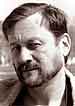
Michael Bronski is the author of
Culture Clash: The Making of Gay
Sensibility and The Pleasure
Principle: Sex, Backlash, and the
Struggle for Gay Freedom. He writes
frequently on sex, books, movies, and
culture, and lives in Cambridge,
Massachusetts. |
| Email: |
mabronski@aol.com |
You are not logged in.
No comments yet, but
click here to be the first to comment on this
Movie Review!
|