|
|
 |
Fit for 'Masterpiece Theater'
By
Michael Bronski
Wilde
Brian Glibert, director; Julian Mitchell, writer; with Stephen Fry, Jude Law, Tom Wilkinson, Michael Sheen, Gemma Jones, Jennifer Ehle, and Vanessa Redgrave.
How to order
As we come up to the 100th anniversary of Oscar Wilde's death, the wit, playwright, and gay martyr is becoming a media celebrity all over again. Dozens of books are now appearing covering a range of topics Wildean.
But one of the most acclaimed-- and popular-- of the Wilde cultural manifestations is
Wilde, a film starring Stephen Fry as the writer and Jude Law as Lord Alfred Douglas, the boyfriend who is far more trouble than he is worth.
Written by Julian Mitchell (who wrote the film adaptation of
(Another Country) and directed by Brian Gilbert (who made the acclaimed
Tom and Viv), Wilde seems to have so much going for it that its
ultimate failure feels all the sadder. Clearly an ambitious project,
Wilde has the markings of a high-tone classic. Its lavish sets smack of the artistic excesses of every Merchant-Ivory spectacle, and its literary script has the earmarks
of a Masterpiece Theater presentation. And certainly Stephen Fry's impersonation of Wilde-- he has the man's look down perfectly-- is a fine piece of theatrical representation. Fry also convinces us that Wilde is a modern
man trapped in a Victorian nightmare, an artist who manages to skewer and use his social set while at the same time feeling superior and even a little beholden to it. There are even some great sex scenes, and Jude Law gives
an uncannily great performance as the bum-baring and bitching Bosie Douglas.
But in the end the film does not work. What went wrong?
Julian Mitchell's script for Wilde is not unintelligent. He explores the playwright's relationship with Douglas in new and interesting ways (Wilde seems to be attracted to the lad's sexual energy and youth
rather then actually interested in sex itself). The script manages as well to find intelligent, non-judgmental ways of looking at Wilde's marriage and home life (although the film does tend to portray Constance Wilde as a victim
and not the multifaceted woman she was). It also has enough ambition to attempt to make connections between Wilde's work (as a social critic) and his life (as a renegade), and to show us some of the moral and
social complexities of Victorian society.
But Mitchell's script is frequently ponderous and pretentious. His Wilde drops so many
bon-mots and one-liners that it begins to feel like a compendium of "the wit and wisdom of Oscar Wilde." Often
the witticisms don't really explicate character or move the plot along. The screenplay uses literary devices, like endlessly quoting from Wilde's fairy tale
The Selfish Giant, to "explain" his decentered relationship to his
children, using an over-voice reading The Ballad of Reading
Gaol or even showing scenes from The Importance of Being Earnest
to mirror a plot twist. These devices don't really work and weigh the script down with a "seriousness"
it cannot support.
Even worse, Mitchell's characters utter literary profundities better avoided. When asked about what he has written in prison, Wilde responds: "It's a letter to Bosie, telling him I love him but can never see
him again. I call it De Profundis. It comes from the very depths." (Presumably this is a sop to all those who want to catch every word, but do not understand Latin.)
To complement this script, Brian Gilbert has fashioned a beautifully looking film that features lovely houses, interiors, and camera-work. It is, perhaps-- and Wilde might approve-- "art for art's sake," but
not, unfortunately, for art's good. The final result is that
Wilde constructs a "tasteful" entertainment that mitigates against the narrative's more dramatic or iconoclastic impulses. Wilde enjoined his readers and listeners to value
the beautiful, but his aesthetic also demanded that this beauty transform the world-- art as politics, art as action. But Gilbert's lush camera work reinforces a middlebrow, middling-interest status quo of "art film" and leaves us,
in the end, with little more than pretty pictures (quite different from great art) and curiously disembodied quotes from a great writer. While Oscar might have liked the attention, he would have hated the movie.
| Author Profile: Michael Bronski |
|
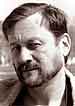
Michael Bronski is the author of
Culture Clash: The Making of Gay
Sensibility and The Pleasure
Principle: Sex, Backlash, and the
Struggle for Gay Freedom. He writes
frequently on sex, books, movies, and
culture, and lives in Cambridge,
Massachusetts. |
| Email: |
mabronski@aol.com |
You are not logged in.
No comments yet, but
click here to be the first to comment on this
Movie Review!
|