|
 |
Ned Rorem's diaries, and a new take on gay history
By
Michael Bronski
The Paris Diary and the New York Diary: 1951-1961
Ned Rorem
Da Capo Press
How to order
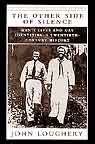
The Other Side of Silence: Men's Lives and Gay Identities
John Loughery
Henry Holt
How to order
Over the past fifty years, Ned Rorem has not only been among the most prolific of US composers, but among the most literate. Along with a half dozen books on
music theory, composition, and criticism (including the highly praised
Settling the Score) and a memoir (Knowing When to
Stop), Rorem has written four of the finest--
and frankest-- literary diaries in modern literature:
The Paris Diary, The New York Diary,
The Later Diaries, and The Nantucket
Diary. First published (separately) in the mid-1960s,
The Paris and New York Diaries:
1951-1961 (De Capo Press, paper, 350 pages,
$19.95) set a new tone for how personal contemplation and fine
writing could provide a platform for examining the exhilarating contradictions of the fit of life, art, and politics. Rorem, then in his late 20s, was just beginning his career
and met, knew, and socialized with the most famous artists in the two cities where he learned and honed his craft.
Rorem is a fine observer-- the
Diaries are filled with brilliant snapshots of the social and artistic circles of their time. But he also explores what it means to be
an artist, a homosexual, and an American in the 20th century.
While they are beautifully written, The Paris and New York
Diaries are as much social documents as literature-- Rorem can be clever and catty by
turn about his benefactors and detractors.
"It's not that I'm more self-involved than other people," Rorem writes, "I'm just more free about showing it." Honesty, along with intelligence
and empathy, is what makes Rorem's Diaries dazzling,
delightful, and moving.
Out of the memory hole
Gay history as a genre has been a relatively recent invention. From Jonathan Ned Katz's
Gay American History (1976) to Arthur Evans's
Witchcraft and the Gay Counter Culture (1978) to Lillian Faderman's
Surpassing the Love of Men (1981), gay and lesbian historians have charted both the presence of homosexuals in
the world as well as their influence upon it. To great effect, John Loughery draws upon this ground-breaking work in
The Other Side of Silence (Henry Holt, cloth,
506 pages, $35). Much gay history writing has treated "politics" and "culture" as separate concepts. But using the writings of such historians as Katz, Allan Bérubé,
John D'Emilio, and George Chauncey, Loughery has pieced together a highly readable survey of eight decades of gay life, knitting together the political and the cultural.
Thus he is able to explain, for instance, how the openly gay career of Tennessee Williams existed during the homophobia of the 1950s, or how the Supreme Court's
Bowers v. Hardwick decision could be made at a time when gay arts and culture were flourishing. Loughery is as mindful of the passage of anti-gay laws as he is the plots of
gay novels and develo pments of gay theater. As a result he manages to bring together-- with wit and intelligence-- a complex and illuminating social history of gay life
in this century.
The joy of this sort of historical overview-- a joy enhanced by Loughery's elegant prose-- is that it makes us aware of
the complexity and complications of how we live and how our lives are structured. Legislation and penal codes are only part of our
lived experience-- what we read, what we watch on television, what we see on the movie screen and look at in advertising all become integral
to how we see ourselves and how the world changes. John Loughery in
The Other Side of Silence understands this and make it
enjoyable, palpable, and thought-provoking.
| Author Profile: Michael Bronski |
|
Michael Bronski is the author of
Culture Clash: The Making of Gay
Sensibility and The Pleasure
Principle: Sex, Backlash, and the
Struggle for Gay Freedom. He writes
frequently on sex, books, movies, and
culture, and lives in Cambridge,
Massachusetts. |
| Email: |
mabronski@aol.com |
You are not logged in.
No comments yet, but
click here to be the first to comment on this
Book Review!
|