November 2004 Cover
|
 |
And did we mention goodies?
By
Michael Bronski
There've been a slew of quite wonderful DVDs released in the past few weeks, all of which are worth watching, and even watching again.
Mike Nichols's adaptation of Tony Kushner's
Angels in America is a terrific, couldn't-be-better version of the award-winning stage play. With Robert DeNiro, Meryl Streep, and Mary Louise Parker in the leads, it is the best gay film of the year.
Michael Jersaki's startling and frightening documentary
Capturing the Friedmans-- about a sex panic on Long Island that begins with hysteria and leads to tragedy and death-- is also stellar. Powerful and well done, this is documentary filmmaking at its best, and a
forceful reminder of how much our culture hates sex and children.
C. Jay Cox's Latter Days is a funny, moving, altogether original story of a superficial queen who meets a serious Mormo. With so many gay films being extra-light on content or style,
Latter Days is a great antidote to mindless gay cinema.
But even with all these great DVDs, it's still sometimes hard to find something to watch on a rainy weekend. I mean, how often can you rent
Funny Girl or Boys Don't Cry?
Two films recently released on DVD that are worth checking out and watching (especially for the first time) are William Castle's 1961 shocker
Homicidal and Mervyn LeRoy's 1956 black comedy horror film
The Bad Seed. Each over four decades old, both are excellent in
almost all ways. While at times they may appear to verge on "camp"-- despite their very serious moments and intent-- they are also well-made, oddly moving, and even for our current sensibilities, quite shocking.
William Castle was a master of shock-schlock. His great films-- such as the 1958
House on Haunted Hill and the 1959 The
Tingler pretty much defined the genre in the late 1950s. In 1960 he released
13 Ghosts, which was OK, but below par for Castle. But in 1961 he
scored big with Homicidal. Castle was a master at promotion, and there was always a gimmick to his films. In
The Tingler, the monster gets lose in the movie theater and the audience has to scream to protect itself, and certain seats were rigged with vibrating devices; in
House on Haunted Hill, fake skeletons were suspended from the ceiling and flown over the audience's heads. The trick in
Homicidal is equally neat, and does not depend on being in a rigged-up theater.
Homicidal is set in Ventura, California, and is the story of Miriam Webster, who is engaged to be married to Karl. Miriam's half-brother, Warren, has engaged Emily to care for their old nurse, Helga. Unfortunately there's a homicidal-- or as it is often pronounced in the film,
homo-cidal-- killer running around Ventura, and quite frankly all of the characters-- except wheelchair-bound Helga-- look like prime candidates. And many of them have some rather interesting secrets as well.
It is hard to write about Homicidal-- not simply because you don't want to give away any of William Castle's little plot twists, but because the film itself defies easy classification. Sure, it's obvious from the opening scenes that this is a
Psycho rip-off-- Castle's genius was in recycling cultural trends, not inventing them. But as a
Psycho rip-off, it goes to extremely interesting and unexpected places. But beneath the clever twists and off-the-wall sensibility-- half realism and half grand-guignol
mis-en-scene-- Homicidal probes at some very real
sexual anxieties that resonate even more now then they may have in 1961. I use the film in my "Introduction to Gay, Lesbian, Bisexual, and Transgender Studies" course at Dartmouth College, and the students-- none of whom have ever heard of the film-- are as thrilled by it as I was
when I saw it in 1961.
Half a decade before Homicidal, Mervyn LeRoy directed
The Bad Seed. The film was based on the hit Broadway play by Maxwell Anderson, which in turn was based in the bestselling novel by William March. All three were such popular entertainments that their
title-- The Bad Seed-- has become common English.
There is no secret-- at least now-- that cute, polite, and unbearably proper little ten-year-old Rhoda Penmark (Patricia McCormack) is a "bad seed"-- a pathological killer who will do anything to get her way, even as she charms her parents and almost all the other adults in
the film. While we may know the plot from the beginning-- although it is still quite enjoyable to see Maxwell Anderson's well-made narrative unfold step-by-step-- the joy in the film is in the acting. McCormack gives a performance that is at once over-the-top camp, yet still carries
with it enough emotional truth to makes us shudder.
There's nothing particularly gay about the film-- although in the novel there is a semi-closeted gay character who's quite interesting-- but the film is very queer. Its insistence on debunking myths of happy families and innocent children was radical for the 1950s, and in
many ways, today as well. Like Homicidal,
The Bad Seed uses the traditions of a camp sensibility to attack and critique the everyday structures of identity, behavior, and social organization-- especially the idea of family-- that we simply take for granted. In many ways, this makes
them authentic horror movies-- because the horror, the unimaginable grotesqueness of everyday life, is central to what attracts and repels us in these films.
| Author Profile: Michael Bronski |
|
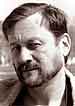
Michael Bronski is the author of
Culture Clash: The Making of Gay
Sensibility and The Pleasure
Principle: Sex, Backlash, and the
Struggle for Gay Freedom. He writes
frequently on sex, books, movies, and
culture, and lives in Cambridge,
Massachusetts. |
| Email: |
mabronski@aol.com |
You are not logged in.
No comments yet, but
click here to be the first to comment on this
Movie Review!
|