April 2003 Cover
|
 |
...as Hollywood queers
By
Michael Bronski
It used to be that the Academy Awards were one of the great gay holidays: parties in bars, endless chatter about who would and wouldn't win what, and the speculation on who was gay
and who should be. There were also the recycled memories of past moments of sublimeness and idiocy-- Liz winning for her near-death experience rather then her acting in
Butterfield 8, Barbara tripping up the steps to get the Oscar for
Funny Girl, Ruth Gordon thanking the Academy for finally giving her an award at the age of 72 for
Rosemary's Baby-- that were always part of
queen lore.
Of course this is what gay men always talked about because, well, there were no gay movies or characters at the Oscars. The event was all about gay sensibility not gay content-- it
was, in many ways, the apotheosis of mainstream gay male sensibility: it was bright, glittering, very gay, and closeted. But the importance of the Oscars has gradually faded from gay male
culture. Sure, there are some Oscar parties at bars-- a few years ago they were a staple of AIDS fundraising. But while Oscar's gay caché has dipped, the movies themselves have become far gayer.
This year there are an array of queer films and characters-- and a maturity to them-- that we've never really seen before. Stephen Daldry's
The Hours-- based on Michael Cunningham's novel-- featuring many gay and lesbian characters, is up for nine Oscars. Todd Haynes's
Far From Heaven (which turns on a gay plot twist) is up for four.
Frida-- based on the life of Frida Kahlo-- deals honestly (well, semi-honestly) with its protagonist's lesbianism and is up for six awards.
Y Tu Mama Tambien, which features a polymorphously perverse series of
interlocking relationships and a lot of male nudity, is up for best screenplay. And the great Pedro Almodovar is up for best director and best screenplay. While Almodovar's film
Talk to Her has no specific gay content, lets face it, anything Almodovar does is pretty queer, and this film-- with its woozy connections between sex, lust, love, death, near-necrophilia, and religious devotion-- is
very queer.
So why aren't the Oscar's as gay as they used to be? Part of the reason is that the Oscar's aren't what they used to be. Sure, they get attention, but in the 1950s, and even until
the late 1960s, they were a premiere cultural event for all of America. In many ways their prestige as a gay event has dropped along with their mainstream status. And-- not that it isn't all
too obvious-- movie stars aren't what they used to be. "We had faces then," spits out Gloria Swanson as Norma Desmond in
Sunset Boulevard as she decries the fall of Hollywood glamour,
and while acting is probably, on the whole, far better today then 50 years ago, the category of "movies star" is much diminished. And the decline and fall of the movie star was deeply felt in
a gay culture that relied on the likes of Bette Davis, Joan Crawford, Eve Arden, Vivian Leigh, Judy Garland, and even the silliness of a Sonja Henie or Vera Hruba Ralston for comforting
notions of beauty, wit, and resilience.
Putting the ho in 'Hollywood'
But perhaps the primary reason why the Academy Awards are less of a gay event is precisely because there are so many manifestations of queerness now on the silver screen. Gay
men were attracted to Hollywood for its hyper-glamorous, fantasy version of real life. But the fantasy depended on the idea of "the closet." At a time when it was far more difficult to come
out safely, to be present in the world, to even see representation of yourself on the screen, the mythos of Hollywood was a substitute, an elaborate screen-- so to speak-- on which gay
men could project their emotional lives that had to be carefully micro-managed in the material world. So in the end, the more visible gay people could become, the less important the
fabulousness of Hollywood and the silver screen would seem.
In the end the question is: would you rather see Meryl Streep and Ed Harris as a lesbian and a gay men in a realistic and complicated relationship on screen in
The Hours, or would you rather project your inner life onto Bette Davis and Anne Baxter in
All About Eve? Would you rather see complicated male relationships enacted in
Y Tu Mama Tambien or related in a subtextual way to performers like Edward Everett Horton or Tony Randall? Of course, we don't really have a choice: Stonewall happened, gay culture changed, more people came out,
new aesthetics implanted themselves-- and Hollywood is now a very different place.
| Author Profile: Michael Bronski |
|
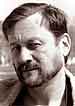
Michael Bronski is the author of
Culture Clash: The Making of Gay
Sensibility and The Pleasure
Principle: Sex, Backlash, and the
Struggle for Gay Freedom. He writes
frequently on sex, books, movies, and
culture, and lives in Cambridge,
Massachusetts. |
| Email: |
mabronski@aol.com |
You are not logged in.
No comments yet, but
click here to be the first to comment on this
Movie Review!
|