|
 |
Books from Finland, Russia, Oz
By
Michael Bronski
Widescreen Dreams: Growing Up Gay at the Movies
Patrick E. Horrigan
Univ of Wisconsin Press
How to order
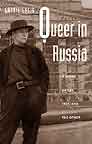
Queer in Russia : A Story of Sex, Self, and the Other
Laurie Essig
Duke Univ Press
How to order
Dirty Pictures: Tom of Finland, Masculinity and Homosexuality
Micha Ramakers
St Martins Press
How to order
If a picture is worth a thousand words, the drawings of Tom of Fin-land must be valued at millions of pants, grunts, and heaving yelps of sexual satisfaction. Tom of Finland, perhaps more than any other gay erotic artist
has defined a contemporary gay aesthetic. His over-the-top images of butch, overdeveloped bikers, loggers, and military men engaging in cock-hard and open hole sexual activity has not only influenced Robert Mapplethorpe
and Bruce Weber, but redefined images of sex and masculinity in popular culture. But Micha Ramakers in
Dirty Pictures: Tom of Finland, Masculinity and Homosexuality
(St. Martin's Press, 272 pages $27.95) approaches Tom of Finland as an art historian. Surveying Tom of Finland's career from his 1950s
Physique Pictorial publications to his numerous gallery and museum shows, the Belgian-born Ramakers makes
the case that Tom of Finland is more than-- though certainly not less than-- porn. Ramakers delves expertly into Tom of Finland's influences-- from the sacred religious art of the Renaissance to the paintings of the late
Paul Cadmus and the transgressive cinema of Kenneth Anger, thus fixing his subject squarely in the contexts of both high and commercial art. He takes up the complicated charges of misogyny, internalized homophobia,
and racism that have been leveled at the artist's work, and is smart about discussing how Tom of Finland's idealized masculinity relates to the state-sponsored art of the Third Reich. Ramakers makes a convincing case that Tom
of Finland's work is not only hot but highly political anti-homophobic "propaganda" as well.
Russian gay life
We in the West are often so dimly informed of what happens in other countries that the idea of gay life in Russia seems nearly unimaginable. Cocksucking in the Kremlin? Rimming Raskolnikov? three-ways
in troikas? Well, think again. Laurie Essig, a sociologist and journalist, explores sexual identity and community in the former Soviet Union in
Queer in Russia: A Story of Sex, Self, and the
Other (Duke University Press, 232 pages,
$17.95). She begins with a short survey of Russian views about same-sex activity-- 1716 saw the passage of laws criminalizing homosexual behavior which were repealed by
the Bolsheviks, reinstated by Stalin, and abolished again in 1993. She then follows through with her larger project of explicating how concepts such as "law," "cure," and "sexual identity" are constructed (in general) and
in Russia. Drawing upon Foucault, Judith Butler, Jurgen Habermas, and Pierre Bourdieu as well as interviews with gay and lesbian Russians,
Essig charts a community struggling to define itself. She is good at describing how of US gay identity effects post-Soviet Russian culture. This is particularly clear when looking at the process of "coming
out" in a society where most "public self-confession" has been politically dangerous. Essig is an astute and seasoned reporter, and her reports are filled with illuminating and revealing detail.
Whether it be the longing to go "over the rainbow" with Dorothy or getting turned on by Steve Reeves's near-naked body in 1960s Italian Hercules epics, almost every gay man has a story about how
Hollywood and movies shaped his life. In Widescreen Dreams: Growing Up Gay at the
Movies (University of Wisconsin Press, 227 pages,
$24.95), Patrick Horrigan tells us in detail how those images on the
silver screen made him into the gay man he is today.
Horrigan is a chatty autobiographer who cannot resist giving us an extra detail of a movie plot, or telling us what his mother was wearing when the family watched TV. The book is built around long,
highly personal, essays (interspersed with five much shorter "outtakes") in which he discusses how, in his childhood and teen years,
The Sound of Music, Hello Dolly, The Poseidon
Adventure, The Wiz, and Dog Day
Afternoon all provided him with a full, active fantasy life which, in turn, gave him a sense of who he was and a place in the world.
Mixing autobiography, film criticism, cultural commentary, and fantasy-- Horrigan's writing is eccentric and overtly personal-- he examines his responses to these films unrelentingly in the context of his
family life, sexual desires, and relationships. Sometimes the introspection is overwhelming, but when he hits his target, as when he writes about how his sexual fantasies about Al Pachino in
Dog Day Afternoon enabled him to understand and act
upon his own sexual desires, he can be both moving and illuminating. When he writes about how late gay film critic and AIDS activist Vito Russo gave him a program from an early Barbra Streisand concert, he can break
a reader's heart.
After reading Widescreen Dreams you will never be able to watch Horrigan's favorite movies again without remembering his life and his world.
| Author Profile: Michael Bronski |
|
Michael Bronski is the author of
Culture Clash: The Making of Gay
Sensibility and The Pleasure
Principle: Sex, Backlash, and the
Struggle for Gay Freedom. He writes
frequently on sex, books, movies, and
culture, and lives in Cambridge,
Massachusetts. |
| Email: |
mabronski@aol.com |
You are not logged in.
No comments yet, but
click here to be the first to comment on this
Book Review!
|