
February 2007 Cover
|
 |
Paying homage to travel writing's queer roots
By
Michael Bronski
Postcards from Heartthrob Town
by Gerard Wozek
Harrington Park Press
How to order
Contemporary travel writing-- essentially a literary product of the Victorian era-- comes in two forms: the intrusive and the imaginative.
The former was once omnipresent, but today is little-read. Like the three-volume memoirs of generals and military men decried by Lytton Strachey in
Eminent Victorians, much such writing came off as turgid, blustering tracts. In their attempts to maintain and consolidate a crumbling empire, British explorers thumped their way through Africa, India, and the Middle East,
bringing a repressive Christianity as well as English colonialism to benighted peoples. Reading a work now such as David Livingstone's
Missionary Travels and Researches in South
Africa is simultaneously boring, scary, and oddly amusing.
F
or the imaginative strain of Victorian travel writing, a debt is owed mainly to women and homosexuals. British women explorers such as Lady Hester Stanhope (who wrote a travelogue
as well as a memoir) and Isabella Lucy Bird (whose 1891
Journeys in Persia and Kurdistan was for years a standard text) displayed far more empathetic accounts of non-English peoples
than their heterosexual male contemporaries. These were women who broke gender barriers and brought a new way of looking at the world.
The travel diaries of Richard Burton are, in turn, quite a different matter. Of course, the people and cultures he encountered were what fascinated him, rather than the idea of making
them more European. His 1865 Wit and Wisdom from West
Africa demonstrated early on that promoting Britishness was low on his list of priorities. Married but clearly homo, Burton was
interested in stiffness beyond the traditional British upper lip. His translation of the
Kama Sutra and Perfumed Garden-- Indian and Arabic sex manuals-- testify to that, as does his
The Sotadic Zone, a historical and anthropological accounting of same-sex fucking.
Luckily, today's travel writing is more influenced by Hester Stanhope and Richard Burton than by David Livingstone. And, no surprise, some of the best travel writing is still being done
by sexual and gender outsiders. Is it any surprise that James Morris-- later, Jan Morris-- is one of the best-selling travel writers of the past half-century? Or that Bruce Chatwin was such a
popular chronicler of his journeys?
In this vein is Gerald Wozek's Postcards from Heartthrob
Town-- a funny, sexy, and at times moving series of adventures, travel memoirs, and fictional sketches that manages to be both
a great read and terrific social commentary. Like his deviant Victorian predecessors, Wozek has a fine understanding of his own place in the world and how the imagination is as important
as trains and plans in traveling long distances. The opening chapter, "Tenderness of the Wolves," begins: "I invent the world from inside my playhouse. My G.I. Joes have never left home or
been to war. I have buried their jeep ranger in a gopher hole along with their tiny bayonets, combat helmets, and grenades. They wear long skirts fashioned from wheat stalks and field grass.
They dangle on wires when I want them to fly. They practice the Kama Sutra on one another in secret."
But Wozek moves out of his playhouse-- and his childhood-- to begin to roam the world. The bulk of
Postcards is comprised of travel stories-- from Germany, Japan, Oaxaca,
Vienna, Budapest, Casablanca, Ireland-- many of which involve some form of sexual adventure and all of which create a wonderful, vibrant sense of time and place. Wozek finds the thread
binding locale, fantasy, and desire: "I don't know why all of the beautiful men in Berlin seem to linger near the Fairy Tale Fountain at the entrance to Friedrichshain Park, but this
neo-Baroque structure made up of characters from Grimm's stories seems to be whispering to amorous strangers from everywhere in Europe to connect." The narrative spins in different directions
and ends with a meditation on the nature of love and desire as Wozek remembers the pain of the heroine in
Lucia di Lammermoor as he jerks off watching his
traveling-companion/platonic-partner have sex with another man. It's a moving scene-- more Richard Burton than Hester Stanhope-- bridging the eros of travel with the excitement of sex.
Much of Postcards from Heartthrob Town is a meditation less on what it means to travel and more about the notion-- always illusory here-- of home. What does home mean? How do
we define it? Why do some of us want to leave it so often? This queer-- in every sense-- series of travel adventures resonates with, even mimics, its Victorian roots. Richard Burton,
Hester Stanhope, Isabella Bird all left England because they would not abide by its repressive rules, its confining restrictions. In
Postcards, Wozek-- and many of his friends, partners, and
traveling acquaintances move and explore for the same reasons. Desire is often abroad and waiting to be chased. Sometimes hot, frequently tender, the desires in
Postcards are well worth pursuing.
| Author Profile: Michael Bronski |
|
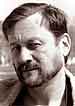
Michael Bronski is the author of
Culture Clash: The Making of Gay
Sensibility and The Pleasure
Principle: Sex, Backlash, and the
Struggle for Gay Freedom. He writes
frequently on sex, books, movies, and
culture, and lives in Cambridge,
Massachusetts. |
| Email: |
mabronski@aol.com |
You are not logged in.
No comments yet, but
click here to be the first to comment on this
Book Review!
|