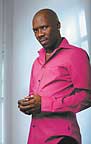
Gareth Henry (photo: Paula Wilson)
|
 |
Horrific anti-gay violence on the island has provoked international outrage. But a generation ago, Jamaica's Gay Freedom Movement led the Caribbean's gay agenda. What changed?
By
Bill Andriette
>"Come back to Jamaica" was the slogan cooked up in 1981 by a New York ad agency. The idea was to lure tourists back to the Caribbean island after widely-publicized violence threatened the country's major source
of foreign exchange. For the half-dozen activists who launched the Gay Freedom Movement in Kingston in 1975, the jingle carried perhaps special poignancy. In the mid-'70s, the future seemed bright for Jamaicans
embracing same-sex desires. Today, however, any publicly visible gay activist is marked for death. Jamaica is a case study in the fragility of gay liberation -- and of the tenacity of sexual hatred once ignited on a large scale.
A
nti-gay violence was recently back in the international news after a January 29 mob attack in Mandeville, in central Jamaica, left one man presumed dead, apparently chased into a deep pit or killed nearby, and
two severely injured. The Jamaica Forum for Lesbians, Allsexuals, and Gays (JFLAG; Jflag.org
)
cites some 47 anti-gay attacks in 2007. In the past four years, two of Jamaica's most prominent activists have been
murdered. Facing death threats, JFLAG's co-chair Gareth Henry fled to Canada in January, and is seeking asylum (see accompanying interview).
None of this could be foreseen in 1975, say the pioneers of Jamaica gay organizing, whose own efforts came to an end around 1983 amidst increasing violence, a failing economy, and AIDS. But over the years of its
life, the Gay Freedom Movement held regular meetings, published a newsletter ("The Jamaican Gaily News"), operated a drop-in center, staged dances, ran an STD clinic, and kept up contacts with other gay groups around
the world. There was even talk at one point of a pride march through Kingston. Jamaica's nascent gay movement not only led the Caribbean, but had a leg up on many richer, better connected locales in North America.
"At that point in the '70s there was a feeling that maybe we don't have to be afraid, that we can take care of one another," says Richard Iandoli, one of GFM's organizers, who is now an immigration lawyer in Boston.
Party to the people
Jamaica's religiosity often gets blamed for the country's anti-gay attitudes today. Yet the Gay Freedom Movement had churchly beginnings. The group coalesced at a church-run community-organizing agency, which
was involved in numerous radical causes, such as organizing workers. Among the half-dozen or so activists at GFM's core, about half were Jamaican blacks, two were white Catholics from the U.S. -- one of them
ex-seminarian Iandoli, who taught inmates at the National Penitentiary. Among the founders was Chinese-Jamaican Larry Chang, who became the group's general secretary -- perhaps the first Jamaican publicly to come out. Not just
its organizers were diverse: unusual for Jamaica the GFM soon was mingling people both poorer and better-off, lighter- and darker-skinned, butch and swishy.
As members increased -- some 100 people became regularly involved -- they didn't just want to talk sexual revolution. The Gay Freedom Movement obtained use of a house for parties and meetings. The building was in
an area of Kingston used by day for offices and deserted at night -- better for avoiding prying neighbors and gossip.
Novel as it was for Jamaica, the GFM drew on extensive community roots already in place. With bars proving unsustainable, Kingston gay social life centered on underground house parties.
"The house scene was vibrant," recalls Iandoli. He says he only learned of the scene from a visiting African-American friend's chance encounter on a bus with a Jamaican blessed with finely tuned gaydar. "The parties
were wonderful, and from them you'd get to know people and start to see them on the street. People could be very campy and carry on and sort of get away with it. But most of the time they'd do it discreetly." Outings
to remote beaches would be another way to socialize out of harm's way. "Most people were afraid and careful," says Iandoli.
But it was possible to let down guard without courting peril. One GFM activist recalls driving around Kingston with some of the group's more flamboyant members. "Right in the middle of the street they would call out
to some good-looking guy and just really be outrageous, as some of the queens can be," he remembers. "The most that would happen is that once in a while they'd get some insults thrown back at them."
Jamaica's Gay Freedom Movement -- like similar groups around the world -- was testing limits, both of society and its own participants. But at that moment, transgression risked more scandal than terror. Then as
now, Jamaicans could quickly strike up a posse. "Some of it was political in nature," Iandoli says of the mob violence, "some of it was just catching a thief. Sometimes it could be very brutal. But I don't remember it
being directed specifically against gays."
Saving excuses
Like the rest of the English-speaking Caribbean, Jamaica has deeply ingrained anti-gay prejudice -- only more so. But Jamaican culture also had means to self-protect from its own intolerance, like a snake bearing antidote
to its venom.
"The idea that just ordinary masculine-looking guys could be homosexual didn't even occur to people," says one of GFM's founders, who we'll call Roland. Such unthink helped create space for casual homosex. "I think
there was an understanding that as long as you didn't appear effeminate or get penetrated then it was okay." Having a wife or girlfriend has also been a cover that could protect a gay man -- or reflect intrinsic erotic flexibility.
"Before I even found out there was a gay scene my own experience in the countryside was that they just enjoyed getting it on," says Roland of the Jamaican youths he knew in the '70s. The intensity and availability
of same-sex affection and play, Roland says, was what opened the door to finally acknowledging his own feelings. "I was always overwhelmed by the homoeroticism that could be found all around," he says. "It was
exhilarating, which is why the intense homophobia that's cropped up in the last two decades surprises me."
Social, political, and economic upheaval helped erode those defenses. Increasing violence and economic troubles brewing in the '70s worsened in the '80s. Incomes fell for seven years in a row, and unemployment
hovered at 25 percent. Jamaica's 1980 election -- in which some 800 people were killed -- revealed how far had grown the dependence on gangs of Jamaica's two rival political parties, and showed off gangs' growing armory
of guns, bought with proceeds from a booming drugs trade. For a time tourism collapsed, which is what drove the government to seek help from Madison Avenue. AIDS hit the island especially hard -- some 1.2 percent of
the population is infected today -- which added to gay stigma. The GFM faded around 1983 -- the death of its last head from AIDS was the coup de grâce. Afterwards, quiet gay organizing continued under the auspices of
the Jamaica AIDS Society, which in 1998 helped launch JFLAG -- a relation between AIDS and gay organizing inverse to the usual pattern.
The rise in the '80s from reggae of dancehall "murder" music, with themes of misogyny and killing gays -- also marked the loss of civility.
"The Jamaican 'massive' -- finding its voice through popular media, like talk-shows and dancehall -- is now determining the agenda of what it is to be Jamaican, reflecting their values and attitudes," contends Chang,
who himself fled the country amidst threats in 2000, coming to the U.S., where he won asylum four years later. While it still carries economic weight, a "middle class that previously assumed the place of the colonial
masters," Chang goes on, had lost its street cred -- or was bought off by the gangsters.
The volatile mood of Jamaica's underclass exploded in riots in August 1997, when inmates at the General Penitentiary in Kingston and a nearby prison in Spanish Town burned and hacked to death 16 men suspected
of being gay, injuring some 40 others. The rampage started as guards went on strike over a point of honor: abhorrence at the corrections commissioner's proposal to distribute condoms to inmates and warders alike to
reduce the spread of AIDS -- which implied they were having gay sex.
Yet anti-gay killings in Jamaica add just a little to the country's annual toll of self-inflicted death. Jamaica's murder rate, now among the highest in the world, increased almost six-fold from 10 per 100,000 in 1974,
when GFM was founded, to 58 in 2005. (The U.S.'s rate in that year -- high for a Western country -- was a little less than 6.)
"'Let Them Kill Each Other': Public Security in Jamaica" is the title of a report Amnesty International issued in April, helping put names and faces on the grim numbers.
"19-year-old André Thomas was stopped in early September 2007 in the inner-city community of Grants Pen by four police officers," Amnesty reports. "He was wearing a button carrying the picture of a friend who
was killed by gang members. When the officers saw the button they reportedly said "you wearing your friend's button. Your friends will soon be wearing yours." By month's end, Thomas was shot, allegedly by police, four
of whom are on trial for his killing.
The youth's murder was no rarity, but the trial following it was. "Of the 1,422 cases of people killed by the police between 2000 and 2007," the report continues, "only one police officer was so far found guilty of murder."
Historical complexes
Jamaica's institutional dysfunction has helped lift the lid on long-simmering psychic demons. Besides Jamaica's taste for fundamentalist Christianity, what brings the country's homosexual angst to such a boil?
Some students of island's culture note a tendency for Jamaican boys to be highly feminized during childhood, cared for disproportionately by women, with fathers tending to be distant or absent and, when present,
harsh. Some cite the traumas of slavery -- the Jamaican form of which was especially brutal -- on family and gender relations.
"There is a lot of what I call gender and age-group socialization," says Jean Fuller Stanley, a chemist at Wellesley College who chaired a Jamaican studies program in Boston. "Boys of a certain age group, for instance, will
all tend to play together, go the river together, or whatever." It is in part the intensity and implicit erotic charge of male same-sex and same-age relationships, she suggests, that makes overt homosexuality such a
fraught allure.
"I don't think it was a mistake," Chang says about the Gay Freedom Movement, "but I do think there is a marked difference in how gay identity is defined in Jamaica. Certainly the Western model doesn't fit
precisely, because sexuality generally in Jamaica is very fluid. Homosexuality in all its various forms is very prevalent, known about, and practiced. Once you give it a name, once you try to pin it down, then it becomes a problem."
Can GFM's early success be cracked up to beginner's luck? "I think that when we were organizing in the '70s that perhaps the general population was a little more naive about who we were and what we were
actually doing," Chang says. The spread of mass media, he suggests, is part of what fed the backlash.
For Western gay activists, the anti-gay backlash in Jamaica is increasingly on the agenda. While much of the rest of the world has come to accept homosexuality, Jamaica stands out -- at least outside some Muslim
societies -- as the exception. It's a case of regression rather than progress, an inverse image of what's happened elsewhere.
Protests this past Valentine's Day at Jamaican consulates around the world were organized by the Metropolitan Community Church. Representatives of Canada's GLBT advocacy group Egale and the Toronto MCC have set
a deadline of May 12 to proceed with a call for a boycott of Jamaican tourism and exports. It's a boycott that JFLAG opposes. "In our battle to win hearts and minds, we do not wish to be perceived as taking food off
the plate of those who are already impoverished," JFLAG declared in April.
But Jamaica is mirror-image to the West in another sense -- as in reflecting a likeness. The West's sexual liberalization has also provoked a violent backlash -- evidenced by the sex-offender registries that
disenfranchise some 600,000 people in the U.S., or hair-trigger laws that impose decades-long sentences -- to popular acclaim -- for downloading the wrong cartoon or chatting with police posing online as horny teens. In the hierarchy
of mass-media concern -- now attentive to anti-gay violence in Jamaica -- attacks on American sex-offenders matter only a little more than the slaughter going on among Jamaica's poor.
If the contradictions in Jamaica are easier to see for North American viewers, it's in part because they are not our own, and in part because they're more out in the open.
"It's a hot country, so people are literally physically exposed more," Iandoli says. "It's a poor country so people are closer together. In a some ways everyone is into one another's business. It feels like a very nosy place,
for good and bad. But everywhere you see guys walking around and in their front yards in bathing trunks and no shirts on. There's a sexual energy, a heightened physical drive, that's very attractive, very provocative,
very beautiful. But it can sometimes go to violence -- and, I think, go to hate."
Where it goes from here is uncertain. For now, at least, it's clear that for those forced to leave the county by the current spike in hateful bigotry, the call to come back to Jamaica has yet to be heard.
| Author Profile: Bill Andriette |
| Bill Andriette is features editor of
The Guide |
| Email: |
theguide@guidemag.com |
You are not logged in.
No comments yet, but
click here to be the first to comment on this
Magazine Article!
|