
September 2004 Cover
|
 |
Putting the home into homo
By
Michael Bronski
She Hate Me
Directed by Spike Lee. Starring Anthony
Mackie, John Tuturro.
How to order
A Home at the End of the World
Directed by Michael Mayer.
Based on
the novel by Michael Cunningham.
Starring Andrew Chalmers, Erik Smith,
Colin Farrell, Ron Lea, Sissy Spacek, Matt
Frewer, Harris Allen, Dallas
Roberts, Robin Wright Penn
How to order
In the midst of the season's junk movies, the queer summer standouts are Spike Lee's
She Hate Me and Michael Mayer's
Home at the End of the World. Both films have been slammed-- universally, for the former, and considerably for the latter. But don't
be dissuaded-- it's a case of the movies being smarter than their critics.
She Hate Me, like much of Lee's work, is messily ambitious and overtly political. Most critics focus on one aspect of the plot: Jack Armstrong (Anthony Mackie) is a just-fired pharmaceutical executive who blows the whistle on his employer's reckless financial dealings. He
decides to make money by impregnating wealthy lesbians who want kids. But the film rises above the high-concept subplot and is complicated and engaging, taking its central themes from the Enron and Martha Stewart scandals. The pregnant-lesbian subplot, however, is clear fantasy--
dykes who can afford $10,000 to get with-child would probably opt for artificial insemination from a sperm back, not a quickie bed-romp with some guy they don't know.
That African-American men should take responsibility for their children is one of Lee's messages. But while contemplating that matter, he also considers how family arrangements might be different.
Certainly "family," in its many guises and valences, is the film's theme. The corrupt company that fires Jack Armstrong is always describing itself as "family." Another subplot, involving a Mafia don (John Tuturro) and his brood, shows a different, almost more benign,
vision of familigia. Armstrong's siring of offspring in lesbian households makes a nod to what mainstream media now calls "alternative families." While this aspect of
She Hate Me is not as interesting as the plot about corporate whistle-blowers, it's more interesting then most other
things playing around this summer.
Site of renovations & improvement
The idea of home and family are at the center of Michael Mayer's
A Home at the End of the World, based on Michael Cunningham's novel (he also wrote the screenplay). Cunningham's novel, full of gay content, was a critical and popular hit. The story, albeit with the
deletion of one major character, has made it onto the screen with great success.
It is early 1967 and ten-year-old Bobby Morrow (Andrew Chalmers, later Erik Smith as a teen, and then Colin Farrell as an adult) adores his teenage brother Burt (Ron Lea), who pays attention to him and even gives him LSD to expand his mind and teach him about loving
the world. The boy's mother is dead, then Burt is killed in a freak accident, and then Bobby's father dies. Bobby is adopted by Alice Glover (Sissy Spacek) and her husband Ned (Matt Frewer), who are the parents of his best friend, Jonathan (Harris Allen as a teen, and then Dallas
Roberts as an adult). Bobby and Dallas become semi-lovers until the latter goes to college ands comes out, even as Dallas has an intense relationship with an older woman friend, Clare (Robin Wright Penn). Bobby moves to New York and becomes involved with Clare-- this is all in the
early 1980s-- and they live in the midst of the East Village punk scene. When Clare becomes pregnant by Bobby, all three decide to move to Woodstock to open a cafe and bring up the baby.
Cunningham's novel-- and the film-- nicely portray the easygoing sexuality and drug culture of the late 1960s-to-80s. As teen Bobby and Jonathan get stoned and fool around, it's all presented as perfectly natural. They're even a turn-on for Jonathan's mother, Alice,
who engages the frolicsome boys as an escape from her largely boring life. In the East Village segment, the film presents, in emotional 3-D, characters who've rejected their prescribed roles and are always trying on new ones. Clare enjoys being den mother to two younger men-- one
gay, one of indeterminate sexuality. Jonathan has an active sex life with men which he at first hides, and then is able to be open about, and Bobby, who still views the world through the rose-colored lenses-of-love supplied by his late brother, seems to be a real innocent who has no
desire but to be and make other people happy. The bonds between these three couples-- sexual, platonic, and familial-- are what shine at the center of the film and propel it to its logical, if devastating, conclusion.
A Home at the End of the World deals remarkably honesty and openly with the complications and the complexities of homo and hetero sexualities, and attempts to grapple with the emotional and sexual imbroglios and puzzlements around which people form their lives and
loves. Most of the acting is terrific, but there are some scenes that move too quickly to be affecting-- particularly in showing Clare's surprising actions at the movie's conclusion. But the film's heart and soul are in the right place, and it captures, as no social history could, the
emotional feel of important times and places-- now gone-- of the recent past.
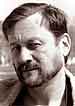
| Author Profile: Michael Bronski |
|
Michael Bronski is the author of
Culture Clash: The Making of Gay
Sensibility and The Pleasure
Principle: Sex, Backlash, and the
Struggle for Gay Freedom. He writes
frequently on sex, books, movies, and
culture, and lives in Cambridge,
Massachusetts. |
| Email: |
mabronski@aol.com |
You are not logged in.
No comments yet, but
click here to be the first to comment on this
Movie Review!
|