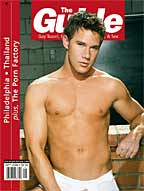
September 2006 Cover
|
 |
Finding home away from home
By
Michael Bronski
Exiles in America
By Christopher Bram
William Morrow Press
How to order
Christopher Bram is among the most exciting and challenging novelists today writing consistently on gay themes. He's usually listed-- in bibliographies, in reviews, on the shelves at Barnes & Nobles-- as a "gay writer."
While accurate enough, what a shame that term doesn't serve now to illuminate an author's work rather than instantly limit it. Since his 1987 debut with
Surprising Myself, Bram has published nine novels. His newest,
Exiles in America, is out now. Nine major works in 19 years is a great run for any novelist-- how often do we wait years, even decades, for that second book from a promising young writer? But Bram's record is particularly
amazing when you realize that each of his books has been radically different.
F
rom the sophisticated coming-out story of Surprising
Myself, Bram produced a World War II sex thriller in
Hold Tight (1989), one of the first novels about AIDS with
In Memory of Angel Clare (1989), and a novel
about contemporary international politics in Almost
History (1992). Father of Frankenstein (1995)-- which became the award-winning film
Gods and Monsters-- was about the life of Hollywood director James Whale, and the
1997 Gossip was a murder mystery about ACT UP and the Beltway rumor mill.
The Notorious Dr. August: His Real Life and Crimes
was a splendid, novelized recreation of a 19th-century memoir which moved from the Civil War
to the birth and death of vaudeville culture. And the 2003
Lives of the Circus Animals was a novel about the contemporary New York theater.
Although all these works featured gay protagonists and explored aspects of gay society, none were remotely the same, and each was saturated by the complex worlds in which they unfolded.
Bram's new novel, Exiles in America, is-- no surprise-- completely different from its predecessors. It begins like an edgier Lifetime movie with a gay twist. Zack Knowles, a psychiatrist, and his lover Daniel Wexler, a
painter, have been together for over 20 years. While deeply in love, they've fallen out of sex. They live in Williamsburg-- Daniel teaches art at the College of William and Mary-- and their lives are suddenly unsettled by the arrival
of a visiting faculty artist, Abbas Rohani, his wife Elena, and their two children.
Abbas is Iranian and Elena, from Russia, although both have roots in Berlin and Paris. Shortly after they become friends, Abbas and Daniel begin a casual affair that becomes intensely serious-- in different ways for each
of them. In reaction, Zack and Elena become confidants. But while
Exiles in America starts out in the groves of academe, it quickly goes many other places.
In past novels, Bram has been brilliant when delineating romantic and sexual relationships and discussing history and politics. Here he does both. Bram's explication of this roundelay of complicated relationships is
splendid. He catches the breath and life of how gay lovers relate, and limns the silences, emotional hesitations, the unsaid love and resentments. His feeling for Abbas and Elena's relationship (even more complicated than that
of Zack and Daniel) is credible and illuminating. But relationships are-- or should be-- the bread and jam of novels.
Exiles in America begins there and moves into deeper, unexplored territory.
Set in the post-9/11 US, Exiles in
America takes on the big questions: what does it mean to be safe? Who is an exile? How are people defined by their religion? By their culture? By what means does society hold
itself together? How far can society go to protect itself before it destroys itself? What is the nature of exile, and what happens to people who suffer it? And what happens to those who exile them?
While Bram at first concerns himself with the puzzles of sex and relationships at home,
Exiles in America soon explodes into international politics when Abbas's brother-- an important Iranian politician-- comes to visit
his relatives, imploring them to consider their roots, especially in light of the war in Iraq and a possible war against Iran. His visit is not unnoticed by the FBI, who have concerns-- and fears, prejudices, and plots-- of their
own. Soon the question of open relationships, of homosexuality, of "homeland," and safety all get played out on a dangerous international stage. With tensions in the Middle East what they are,
Exiles in America feels like a bolt of lightening illuminating our national sky and psyche.
It's tempting to call Exiles in America Christopher Bram's best novel-- although I think
Almost History is unmatched for its scope and deftness. Not only is
Exiles a major "gay novel"-- however you define that-- but it's also
a novel that grapples with the complexity of world politics today. Bram pulls it off, and his book is empathetic and enlightening, politically savvy and emotionally sophisticated.
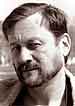
| Author Profile: Michael Bronski |
|
Michael Bronski is the author of
Culture Clash: The Making of Gay
Sensibility and The Pleasure
Principle: Sex, Backlash, and the
Struggle for Gay Freedom. He writes
frequently on sex, books, movies, and
culture, and lives in Cambridge,
Massachusetts. |
| Email: |
mabronski@aol.com |
You are not logged in.
No comments yet, but
click here to be the first to comment on this
Book Review!
|