December 2005 Cover
|
 |
How the chorus line decamped
By
Michael Bronski
Incongruous Entertainment: Camp Cultural Value & the MGM Musical
by Steven Cohan
Duke University Press
How to order
It's no secret that-- at least historically-- the Broadway, and perhaps especially the Hollywood musical is a staple of a camp sensibility. Whatever Broadway could do on stage, Hollywood could do better, bigger, and gaudier-- even if usually with less panache. From Busby
Berkeley routines that featured large phallic bananas
(The Gangs's All Here) to the Divine Judy singing about "The Boy Next Door" or clanging her way through that damned "Trolley Song," the musical touched gay hearts and souls for decades. And the classic MGM musical in particular--
of which the above scenes and songs are all examples-- are central not only to the vibrant Hollywood tradition, but gay sensibility as well.
And yet, surprisingly-- or maybe not, as musicals are, by their nature, to be devoured not analyzed-- there's been very little smart writing about the culture and the politics of the Hollywood musical. Now Steve Cohen has remedied that. He presents his readers with more
insights, theory, facts, figures, and just odd common sense that could even fit on a back-lot sound stage in the old MGM Studios.
Cohen's book fits squarely into the realm of postmodern critical and cultural studies-- Eve Sedgewick and Alan Sinfield make their presence known here, although Lacan and those folk do not. While it's clearly intended for a somewhat serious, academic audience, there's
also enough here for the common reader and any queen who loves these films. The book's structure is ambitious and complicated-- Cohen deals not only with the musicals themselves, but charts how the studio publicity machines-- especially after 1950, when the films were already
all becoming a full decade old-- began to repackage them, playing up their lavish campiness and their exuberant, profligate sense of style. But while Cohen argues that this repackaging-- including the massive, historical reconstitution of these films in the three movies of
That's Entertainment-- is part-and-parcel of how we view the films now, there are great gobs of "queerness" in the films themselves.
Take Gene Kelly, for instance. Cohen argues that Kelly-- helped by the studio visionaries-- essentially created the image of the virile dancer. Striving to overcome the "sissy" image of the male dancer, the athletic and nimble Kelly emphasized in film after film-- particularly
when he played sailors and the like-- that he was just an average guy who happened to dance. Indeed, Kelly was famous for saying-- or rather, quoted as saying-- "any man... who looks like a sissy when he dances is just a lousy dancer." And when we think of Kelly in
Anchors Away, On the Town, The
Pirate, and most famously Singin' in the
Rain, what do we remember most: well, his butt, and the tight pants that show off his legs and crotch, as well as the sexy torso moves that were clearly far more erotic then most men were ever allowed to be in films at that
time. And when you combine this with the fact that Kelly frequently dances with other men-- Donald O'Connor, Phil Silvers, Oscar Levant (now that's gay!)-- he really predicated his image (unlike Fred Astaire) on a rough, even dangerous, male eroticism that still works today.
But along with Kelly, Cohen also focuses on other aspects of screen queerness in
Incongruous Entertainment. Everyone knows that Judy Garland was a fag-hag-- god knows she married enough of them-- and Cohen does a great job of locating this not only in her personal
life, but in her screen persona as well. Looking at her screen relationship with the all-male chorus-- oh, maybe that should be the "all-gay-male chorus"-- especially in the
Minnie from Trinidad or "Great Lady" numbers in
Zeigfeld Girl or the "Get Happy" number from
Summer Stock-- we can see how the usual ideas of heterosexual romance are tossed right out the window and replaced by an odd mixture of male eroticism and female gal-pal bonding that became, in essence, the Hollywood dream-factory ideal of romance.
Why did this happen? Any number of reasons come to mind (not all of them from Cohen)-- radically changing gender relations after World War II, the ever-evolving structure of the studio system, the need for post-war musicals to be more escapist. But there's no
question that the post-war 1940s and the supposedly straightlaced 1950s were far, far queerer then they've been given credit for in the past.
Of course the Hollywood musical-- with its larger-than-life sets and plots, its cute boys, and its parody of heterosexual romance-- is essentially a queer genre. Cohen pushes the envelope a little further, and gives it a history and a theory that puts all this in perspective
and gives it a new life of its own. There's always been a tendency in academic books on pop culture to take the fun out of the trash they're analyzing. Not here-- if anything Cohen makes these movies more entertaining and meaningful then ever before.
Incongruous Entertainment: Camp Cultural Value and the MGM
Musical is smart, fun, and unique.
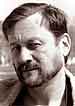
| Author Profile: Michael Bronski |
|
Michael Bronski is the author of
Culture Clash: The Making of Gay
Sensibility and The Pleasure
Principle: Sex, Backlash, and the
Struggle for Gay Freedom. He writes
frequently on sex, books, movies, and
culture, and lives in Cambridge,
Massachusetts. |
| Email: |
mabronski@aol.com |
You are not logged in.
No comments yet, but
click here to be the first to comment on this
Book Review!
|